

Train the ear first.
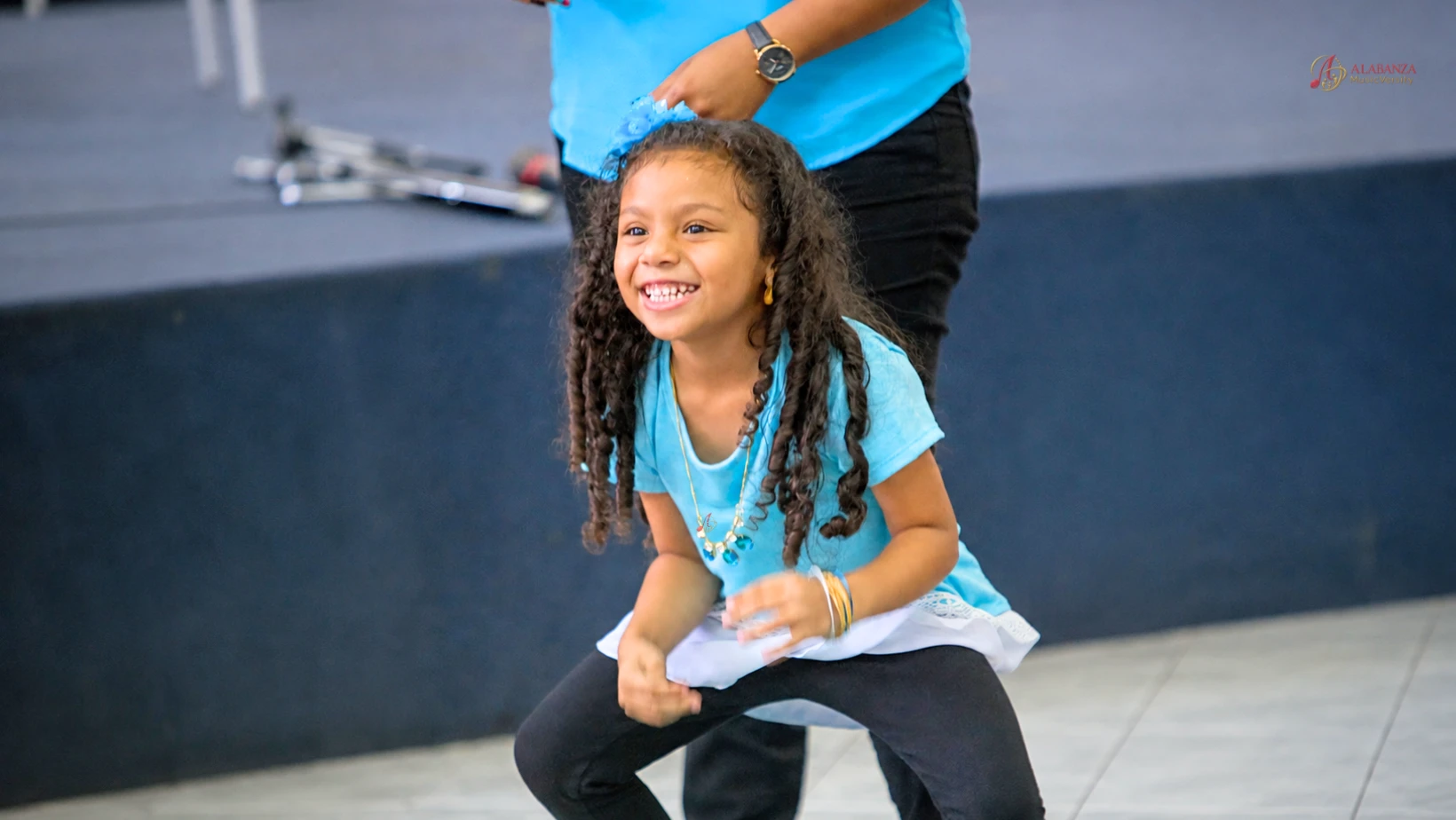
Children sing, listen, feel rhythm, notice tonal patterns and make music before formal symbols become the focus.
Preschool Music Classes in Trinidad
Strengthening communication, confidence and emerging independence.
International programme · Exclusively licensed here
An internationally established early childhood music and movement programme used around the world. Alabanza MusicVersity is the only licensed Musikgarten® provider in Trinidad & Tobago.
How the learning works
Active Allegros is Alabanza MusicVersity’s preschool music class for children ages 3–5 in Trinidad. Our Musikgarten® preschool programme combines music, movement, instruments and multilingual learning to build communication, confidence, focus, coordination and real musicianship.
Children sing, listen, feel rhythm, notice tonal patterns and make music before formal symbols become the focus.

Walking, stopping, balancing, freezing and changing direction give attention and self-regulation something real to practise.
Songs, greetings and sound patterns from several languages help children stay comfortable hearing and responding to difference.
Real Active Allegros moments
Music, movement, instruments, group interaction and multilingual exposure show up together in real class moments.
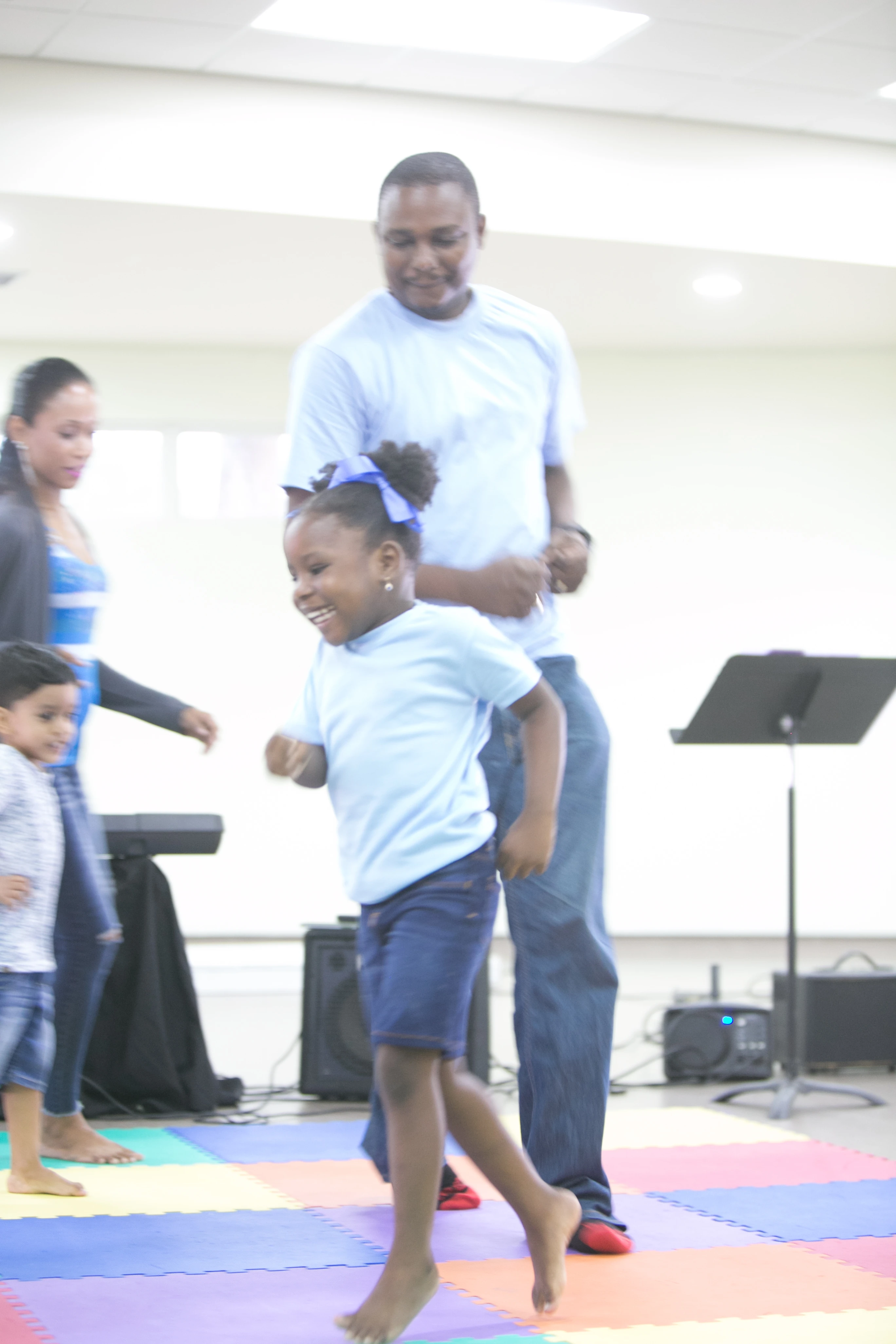
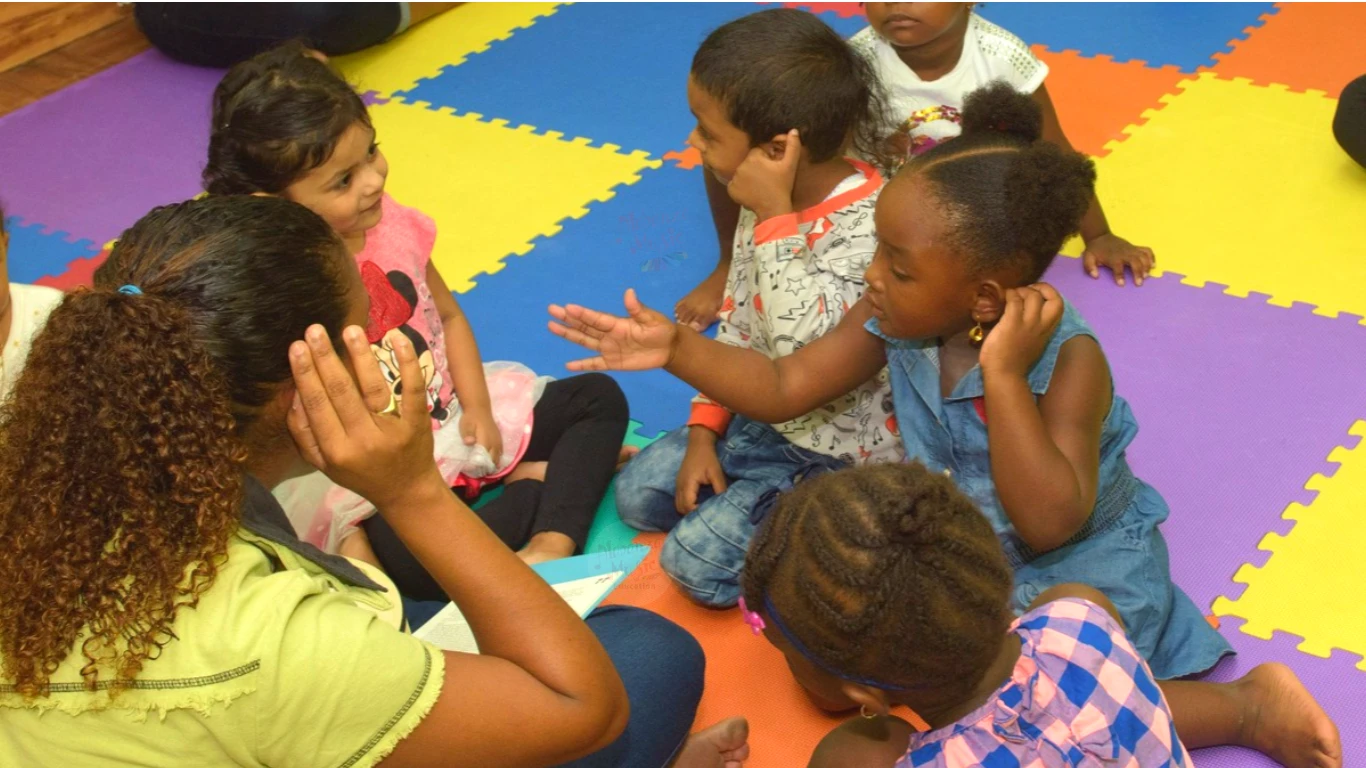
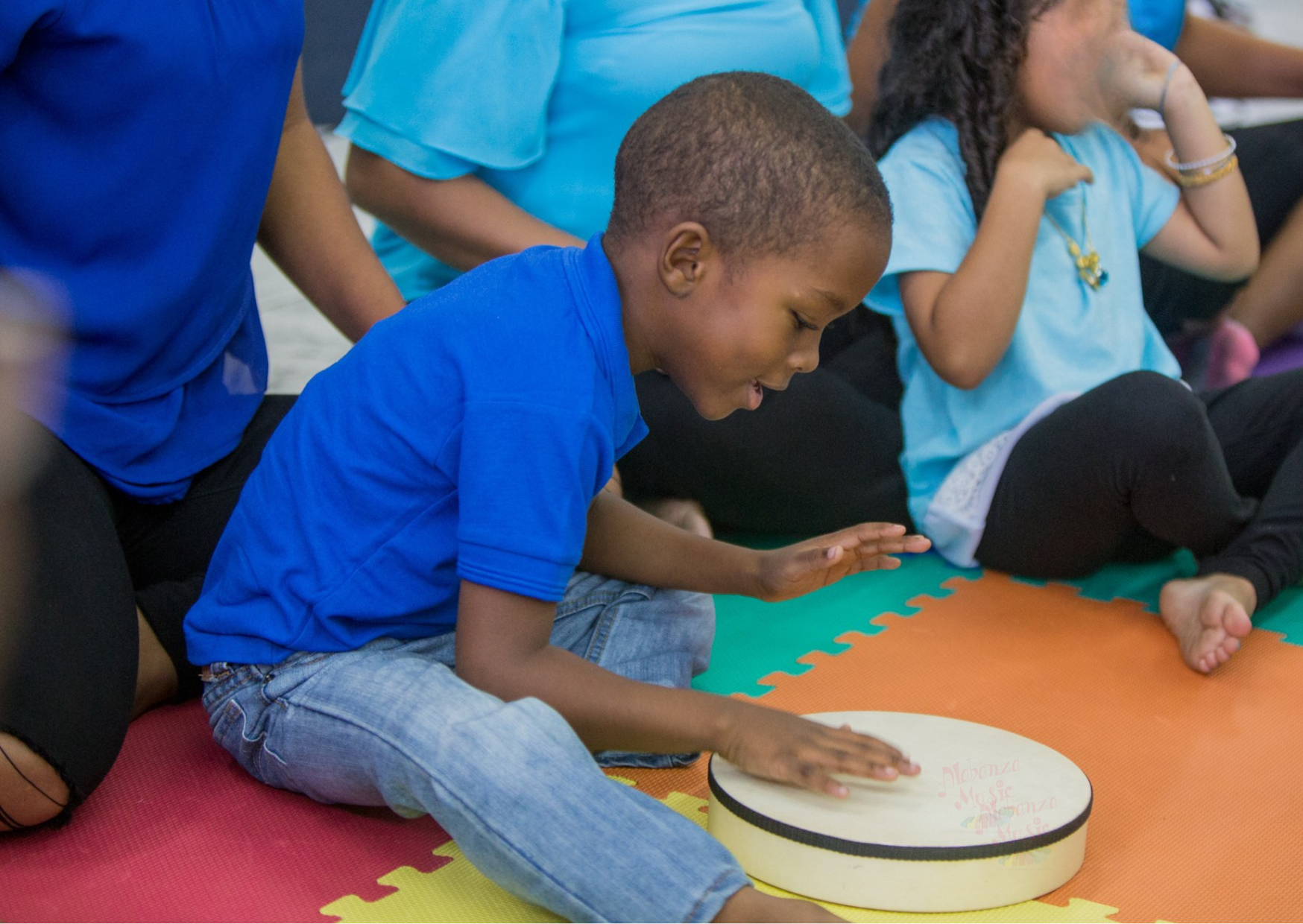
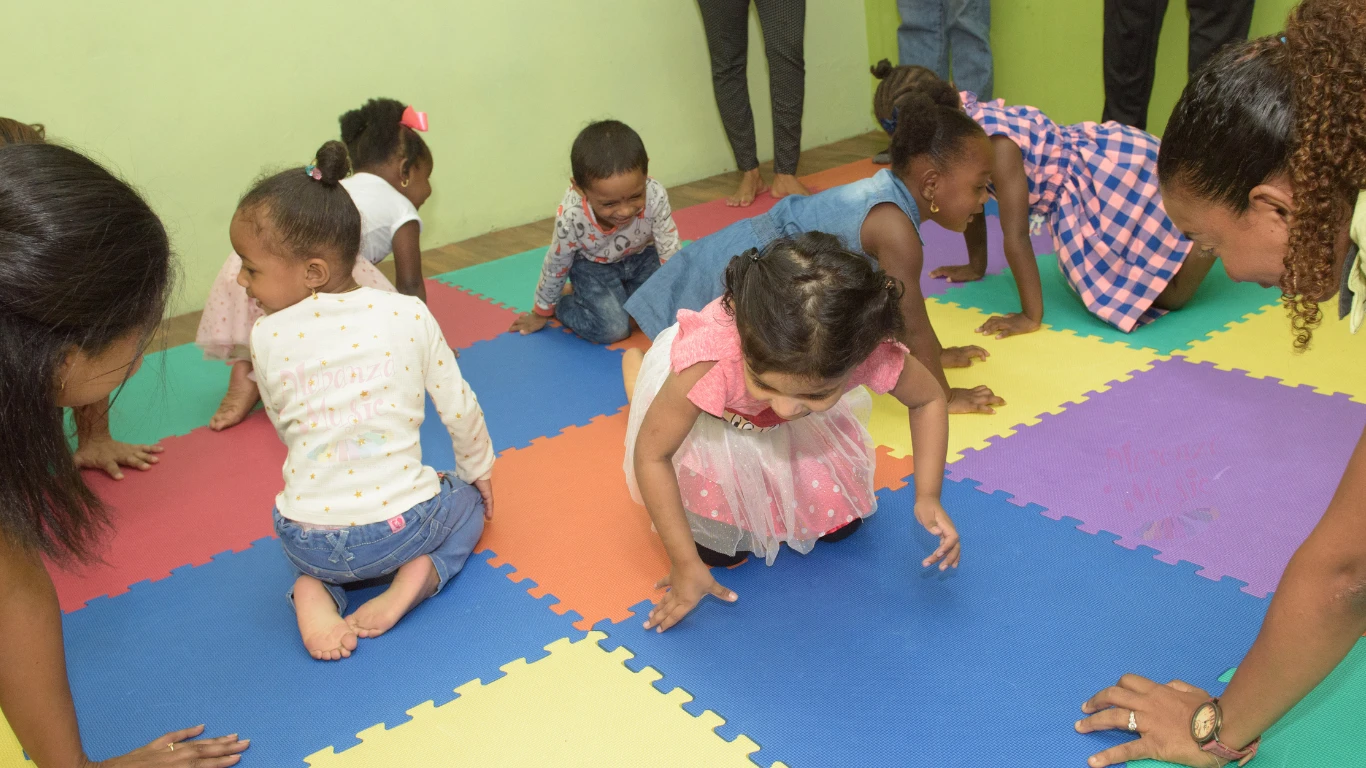
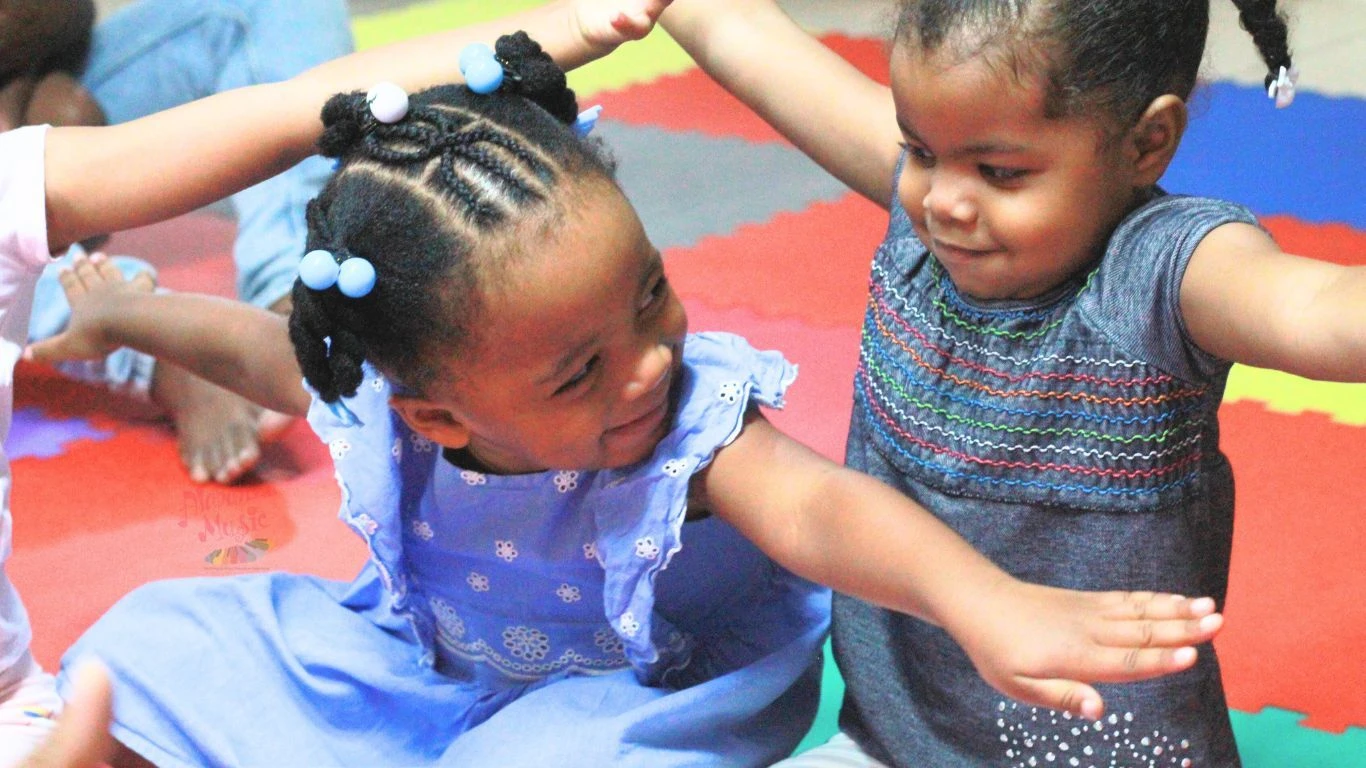
“She learned things musically and socially... waiting her turn, doing what is asked, following instructions. Although it's still challenging to get her to do those things at home, modelling the behaviour from ideas in class has been helpful.”
See it for your family
Book your child's first Active Allegros experience and see the same shift for yourself.
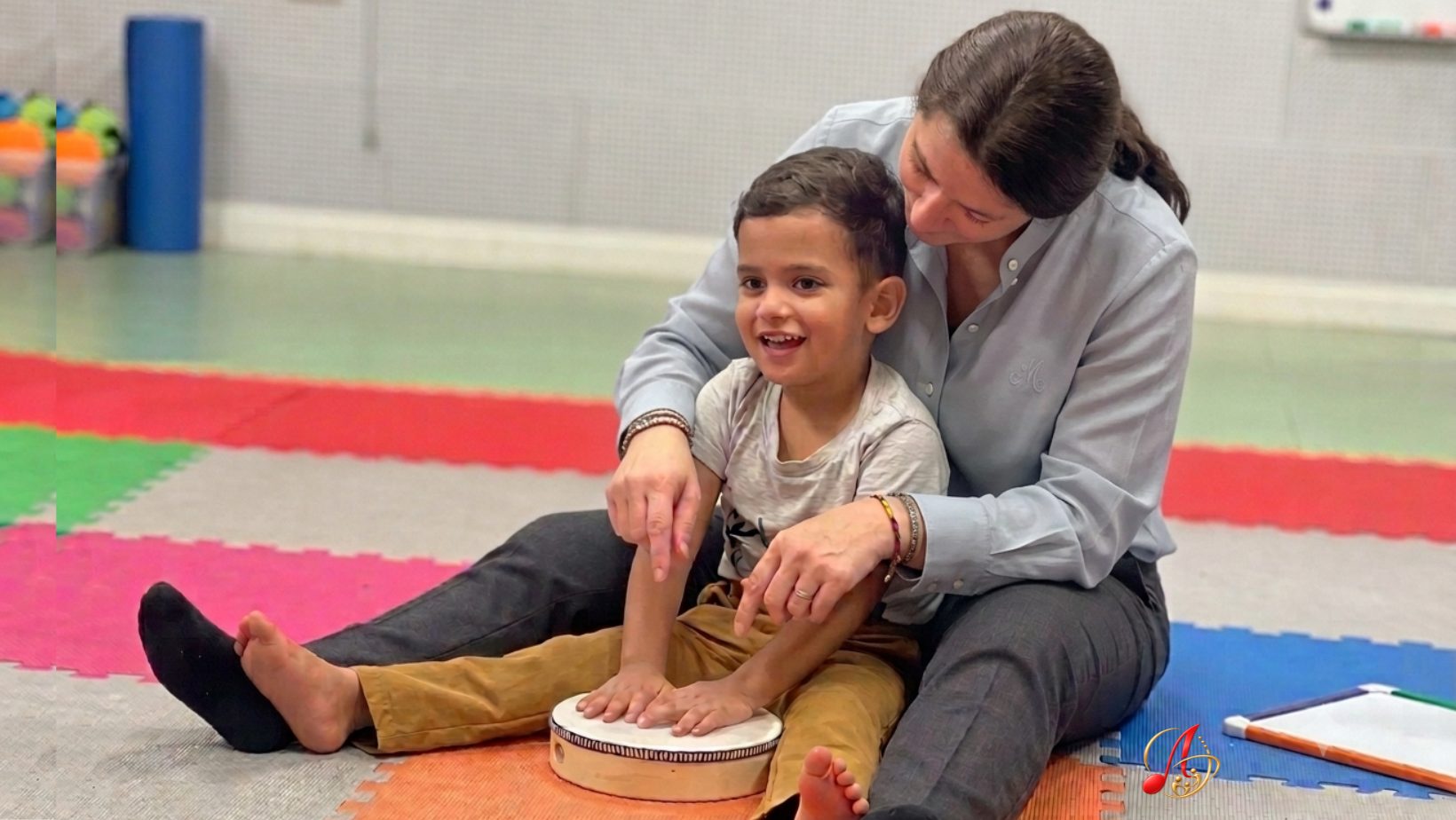
Inside an Active Allegros session
Each session is paced for preschoolers, with one parent participating alongside the child and modelling listening, moving, responding and joining in. Activities vary by lesson and developmental stage, but the experience stays active, musical and connected.
Songs, tonal patterns, call-and-response and repeated musical cues give children practice listening, anticipating and using their voices.
Walking, freezing, balancing, starting, stopping and changing direction turn movement itself into practice for attention, coordination and self-regulation.
Drums, rhythm instruments, resonators and other age-appropriate resources help children explore steady beat, sound, timing and musical response through doing.
Language is woven naturally into songs, greetings, sound patterns and familiar musical routines, giving young ears repeated exposure to different speech sounds.
See it for yourself
Watch children move, listen, wait, respond, communicate and make music together inside a real Active Allegros class.
What is being built underneath
The class may feel playful and active, but underneath it your child is practising important skills that support development well beyond music.
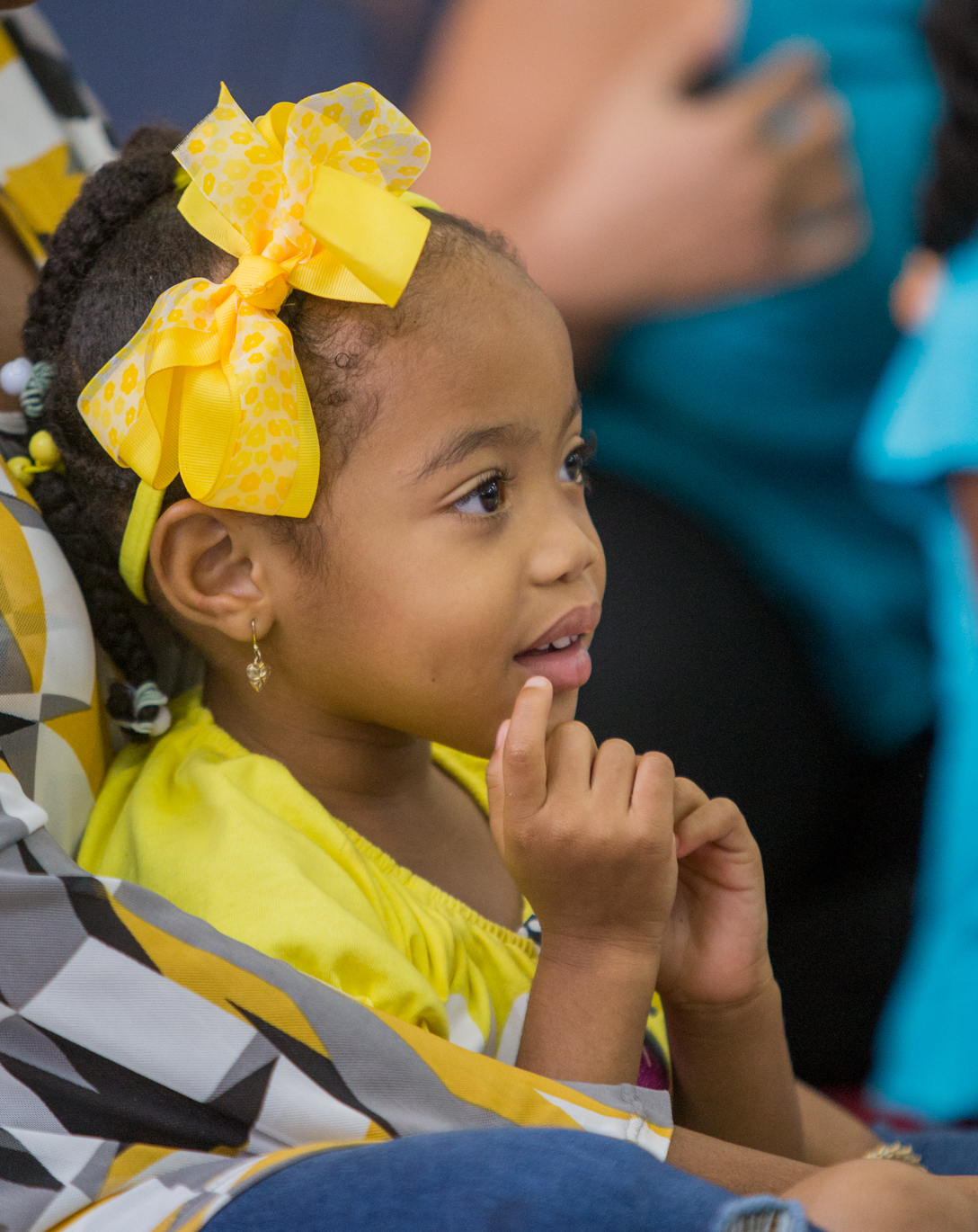
Listening, responding, taking turns and using the voice in a group give children repeated practice communicating with growing confidence.
Musical cues invite children to wait, start, stop, switch and settle their bodies while staying engaged in the activity.
Moving to beat, handling instruments and responding with the whole body strengthen timing, body awareness and coordinated movement.
Children listen for changes, shift between actions, adapt to new cues and make musical choices rather than only copying one fixed response.
Repeated experiences with beat, pitch, tonal patterns, listening and musical response build foundations that can grow into later music literacy.
Songs and sound patterns from several languages help young ears stay open to different speech sounds, accents and ways of communicating.
Real family proof
The first question was whether to come back. Years later, the story is about what continued participation helped build.
Her first experience did not look like a polished performance. The important part was that she wanted to return.
“Musikgarten has been a great experience for both my daughter and I. It was truly amazing to see how the musical concepts were being taught through fun and interactive methods, that seems just as play for the kids.”
She watched those early foundations grow into confidence and versatile musicianship.
“The biggest change in her was her confidence.”
Begin at this stage
Begin with Active Allegros now, then continue through the MusicVersity pathway as your child is ready for greater independence and musicianship.
The MusicVersity pathway
Active Allegros sits inside a developmental pathway that grows toward increasingly independent musicianship when children are ready.
The MusicVersity Year
Each semester builds on the last, leading naturally to Graduation & Certification in July.
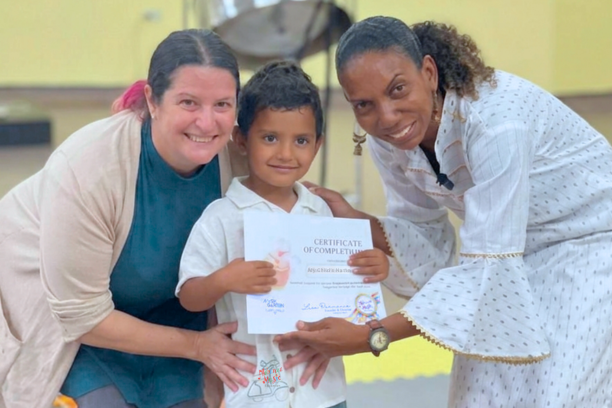
The completion milestone
This is more than a collection of activities. Your child enters a structured journey with a beginning, progression and a completion milestone to work toward.
Choose How to Begin
You have seen what makes Active Allegros different. Now choose the starting point that fits your family.
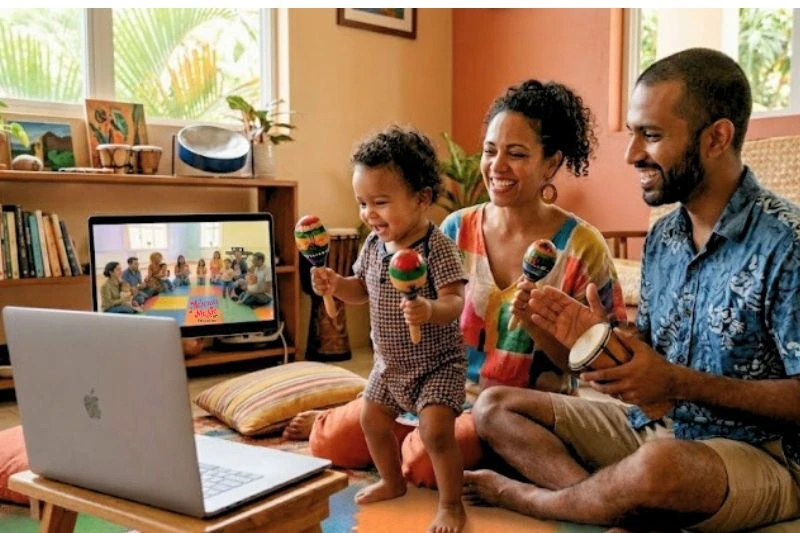
Live Online
Begin Live Online, Wherever You Are
TT$100 / USD$16
A live, interactive parent-child experience for families in Trinidad & Tobago and internationally, bringing music, multilingualism and movement into your home in real time.
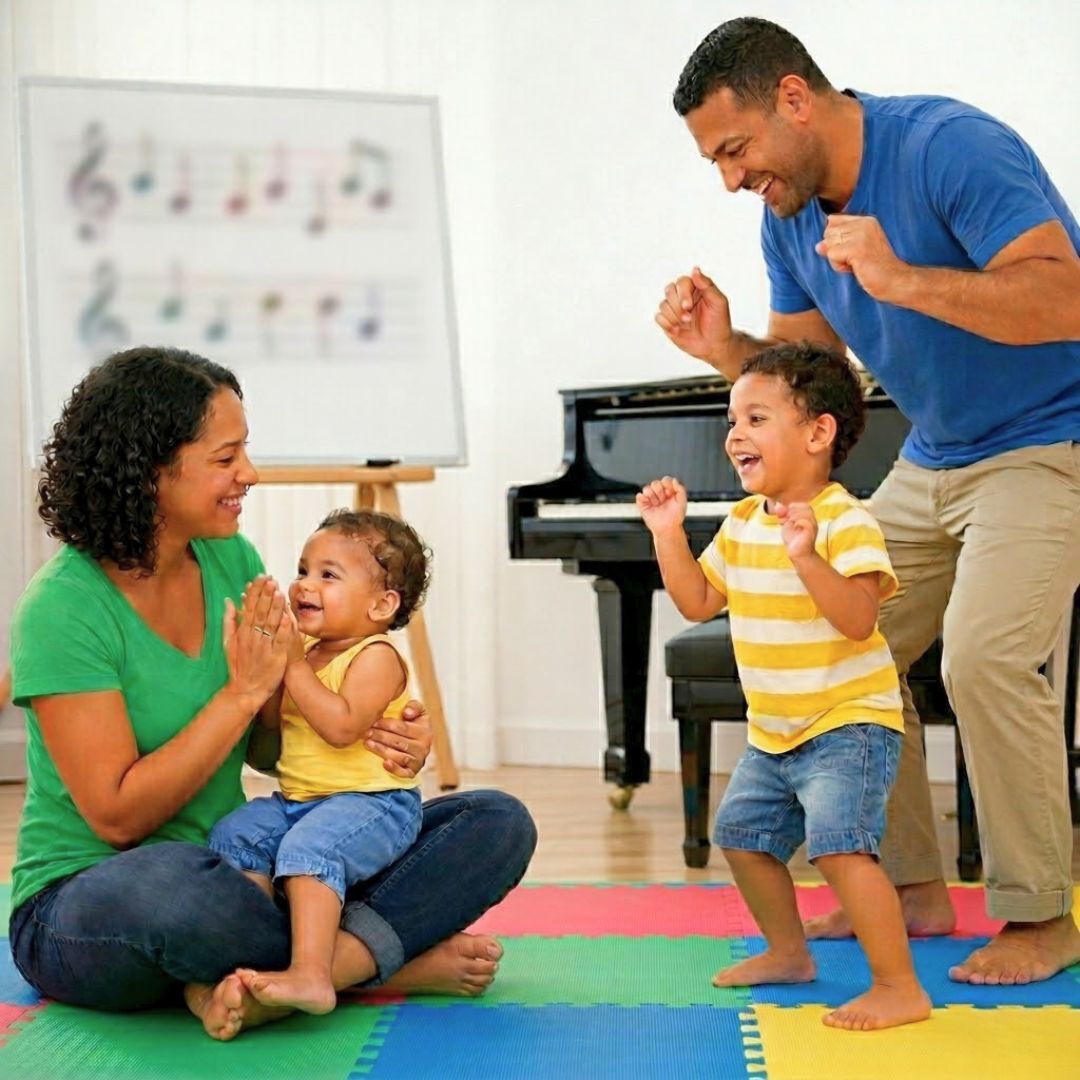
Two Guided Sessions
TT$400 / USD$64
Your child's first real Alabanza experience, placed for their developmental stage.
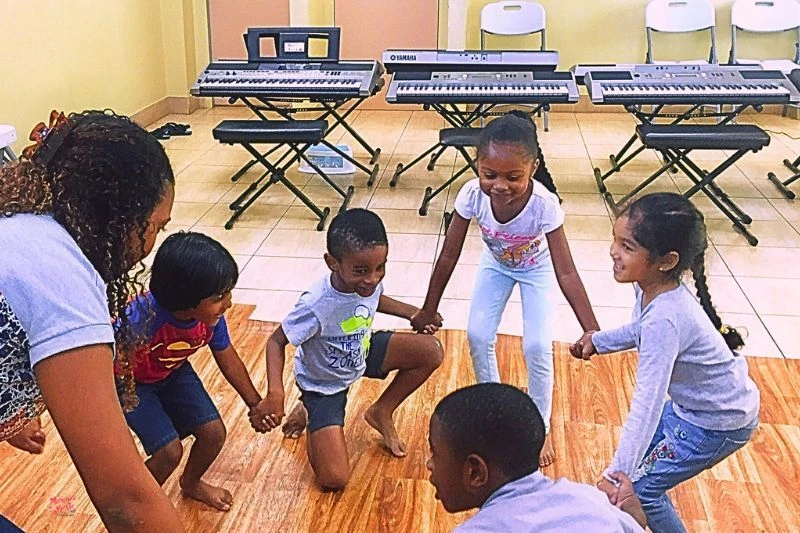
September–October Foundation
TT$1,500 / USD$240
For intentional families ready for a meaningful start before transitioning into full Semester membership.
The difference
Active Allegros is designed around how young children develop, not around making a preschooler look like a miniature formal music student.
Parents often wait outside while the teacher becomes the main model.
The specialist guides the experience, while you model listening, moving, responding and joining in.
Young children may be expected to show “good focus” by staying still for long stretches.
Walking, freezing, balancing, starting, stopping and changing direction become attention tasks.
Success can become reproducing the right action, song or performance on cue.
Children are given room to notice patterns, make musical choices and think flexibly.
A very active child can look as though they are “not paying attention.”
Children practise listening for cues, waiting, switching, stopping, starting and regulating themselves in motion.
The class can be enjoyable without necessarily building toward a longer developmental sequence.
Skills connect across the Semester and MusicVersity year, then continue into later musicianship when the child is ready.
What matters most may be whether the child can reproduce the song or perform it.
Communication, confidence, cognitive flexibility, self-regulation and real musicianship develop together.
The goal is not less musicianship. It is stronger foundations for the musicianship that comes next.
Why we do class this way
Parent modelling, movement and familiar musical routines are deliberate. They give children repeated ways to practise attention, communication, coordination and self-regulation while making music.
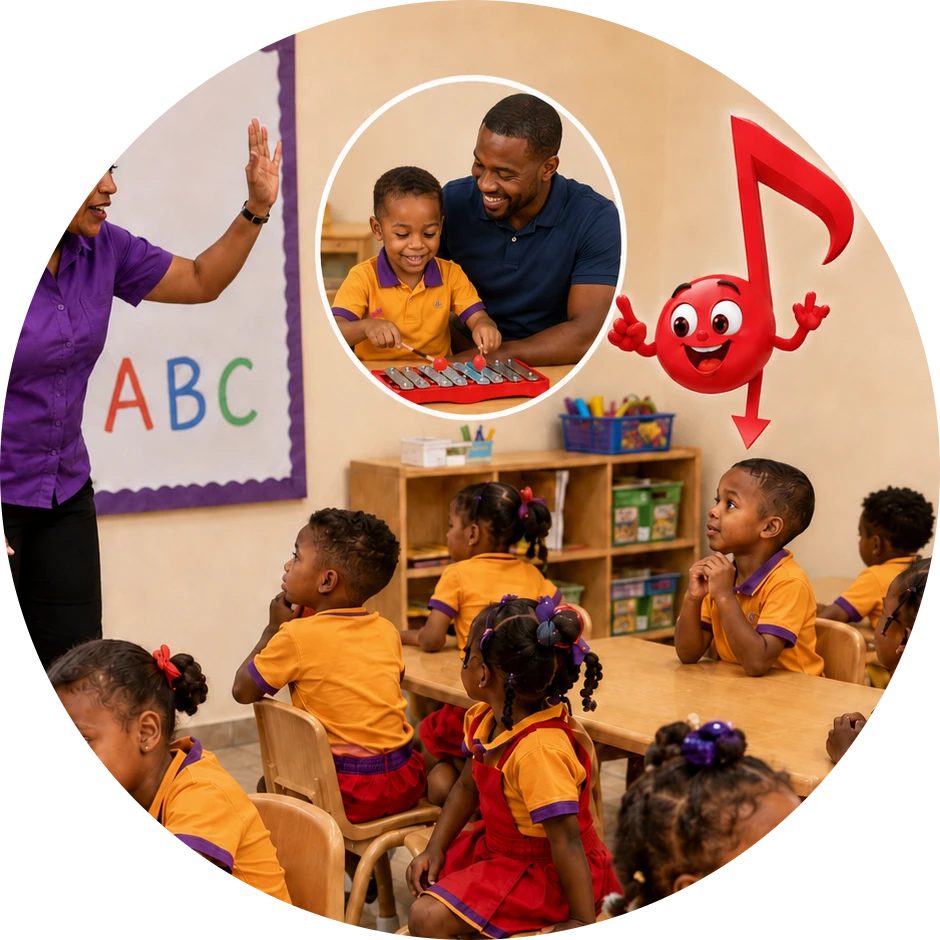
Here, you stay in the room because your presence matters. The specialist guides. You model.
Your child watches you listen, move and respond, then carries those musical routines home.
That consistency helps the learning stick, and parents and teachers often notice the difference in listening, settling and attention.
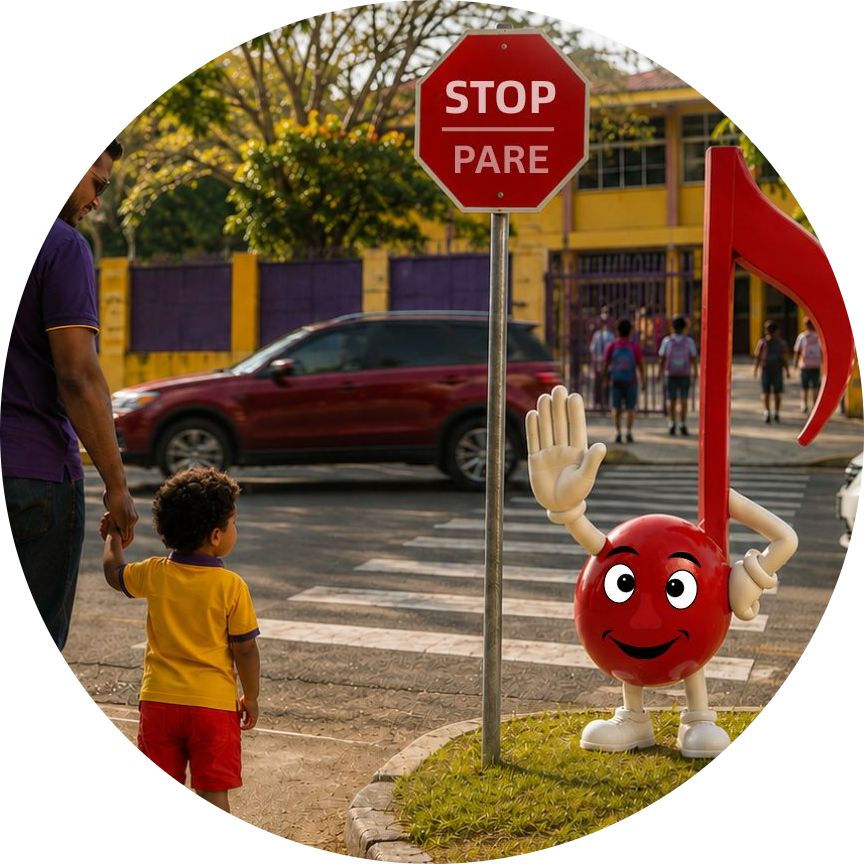
We do not ask a preschooler to prove focus by sitting still for long stretches. We use walking, freezing, stopping, starting, balancing, changing direction and moving to the beat as the attention task itself.
The movement is not distracting from the learning. It is part of the learning.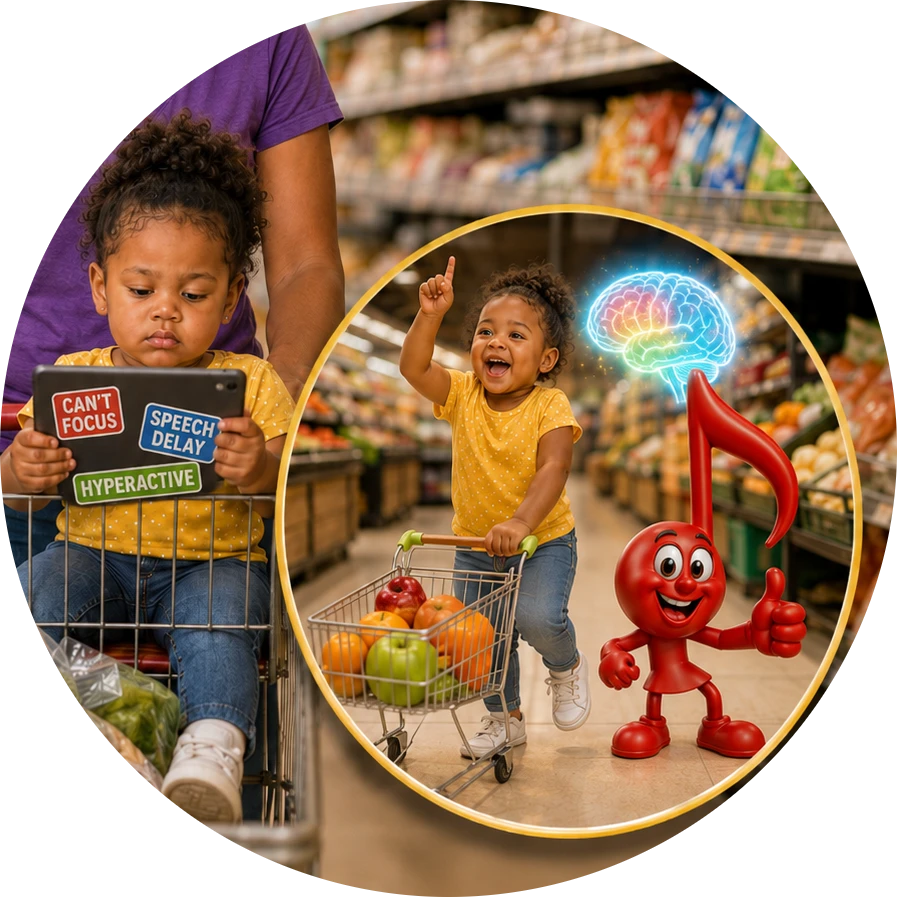
At the supermarket. In the car. Waiting at the doctor. Standing in a line.
A familiar song, chant, rhythm game or call-and-response gives families something to reach for before a device automatically comes out.
When the commitment has to make sense
For a mom bringing twins, the time and effort mattered. What changed her mind was what she began seeing in her children.
Ready when you are
See the changes for yourself. Choose the starting point that fits how your family begins.
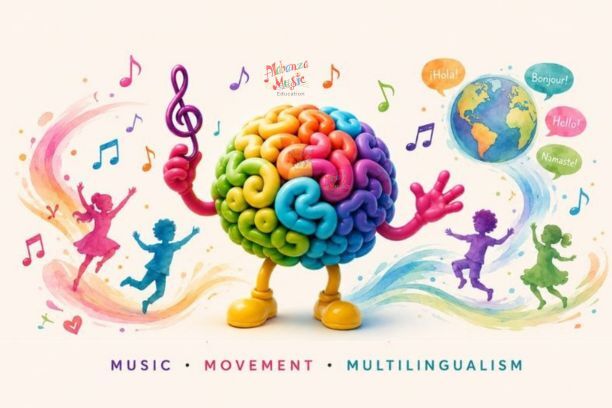
What the research supports
The combination of music, movement and multilingual learning is a powerhouse for the developing brain.
A 2025 review of music programmes for children ages 3–6 found gains in skills like remembering information, controlling impulses and switching from one task to another.
A study with children ages 4–6 found that children exposed to more than one language were better at working out what another person meant from that person's point of view. Even children who had multilingual exposure but were not bilingual showed the advantage.
A review of physical-activity studies with preschoolers ages 3–6 found that attention improved consistently in every study that measured it. Movement is not a break from learning. It can be part of how young children learn to focus.
What we use in class
Depending on the lesson and curriculum sequence, children may explore scarves, rhythm instruments, drums, resonators, movement props, recordings and other age-appropriate Musikgarten® resources. Families may also receive supporting resources for use at home, so familiar songs and routines can continue beyond class.
Why the learning keeps building
Active Allegros uses Musikgarten®'s internationally established curriculum, tailored for preschoolers ages 3–5 and delivered in Trinidad & Tobago exclusively by Alabanza MusicVersity's Board-Certified Early Childhood Music & Movement Specialist. Experiences connect, repeat and deepen so your child is building on what came before.
 Musikgarten® family materials
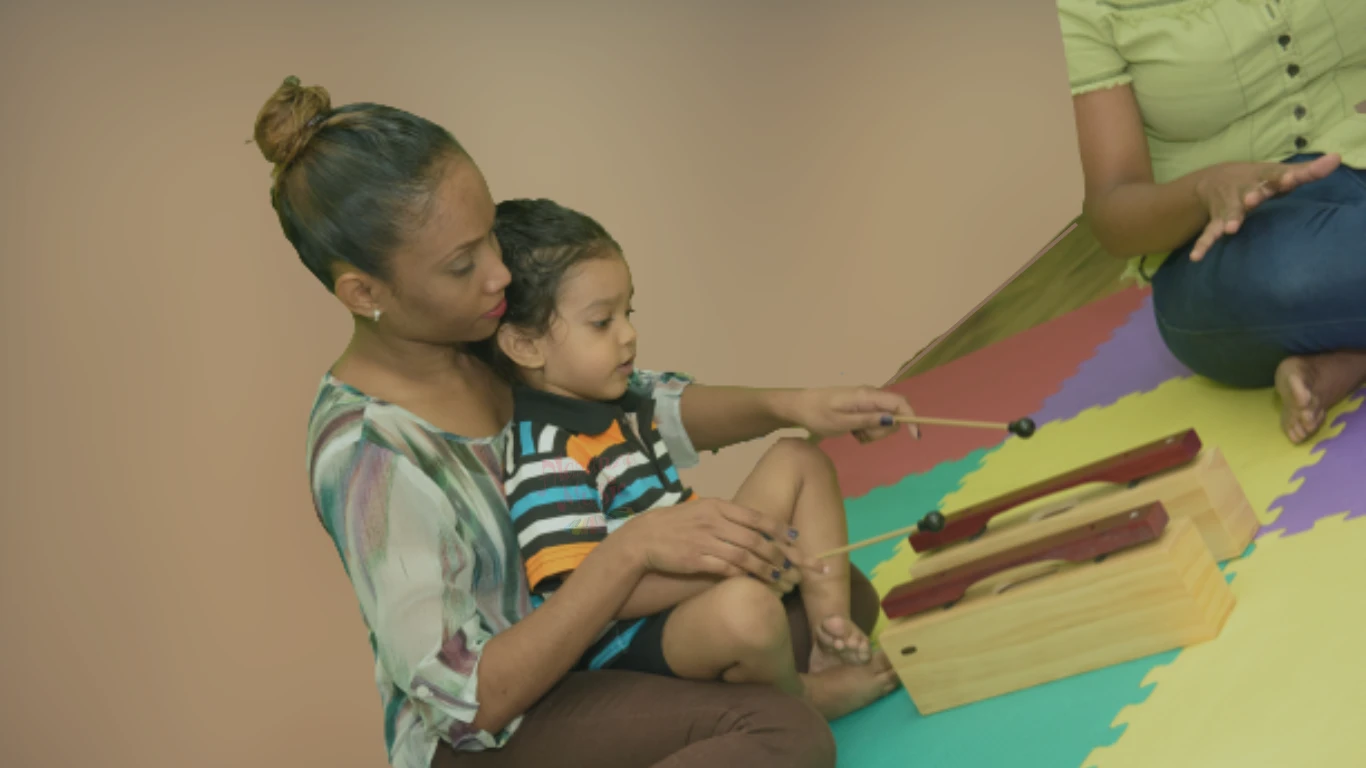 Explore sound together
For families thinking beyond activities
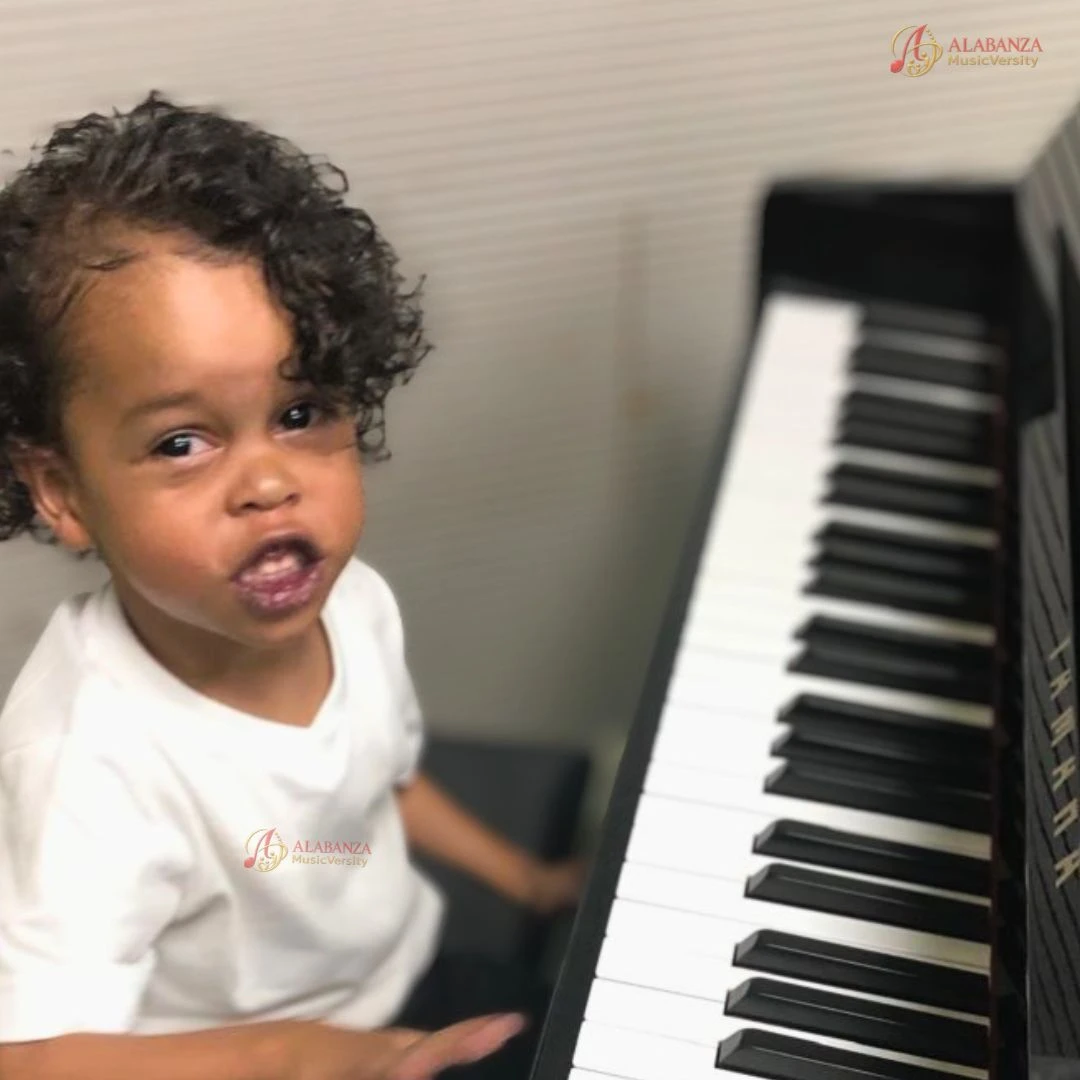
If the goal is to have your preschooler spend an entire Semester reproducing one complex song or being pushed into formal performance before the foundations are ready, we're probably not for you.
There is nothing wrong with wanting your child to play an instrument. We do too. We simply do not make reproducing one complex song or formal performance the benchmark for every 3- or 4-year-old.
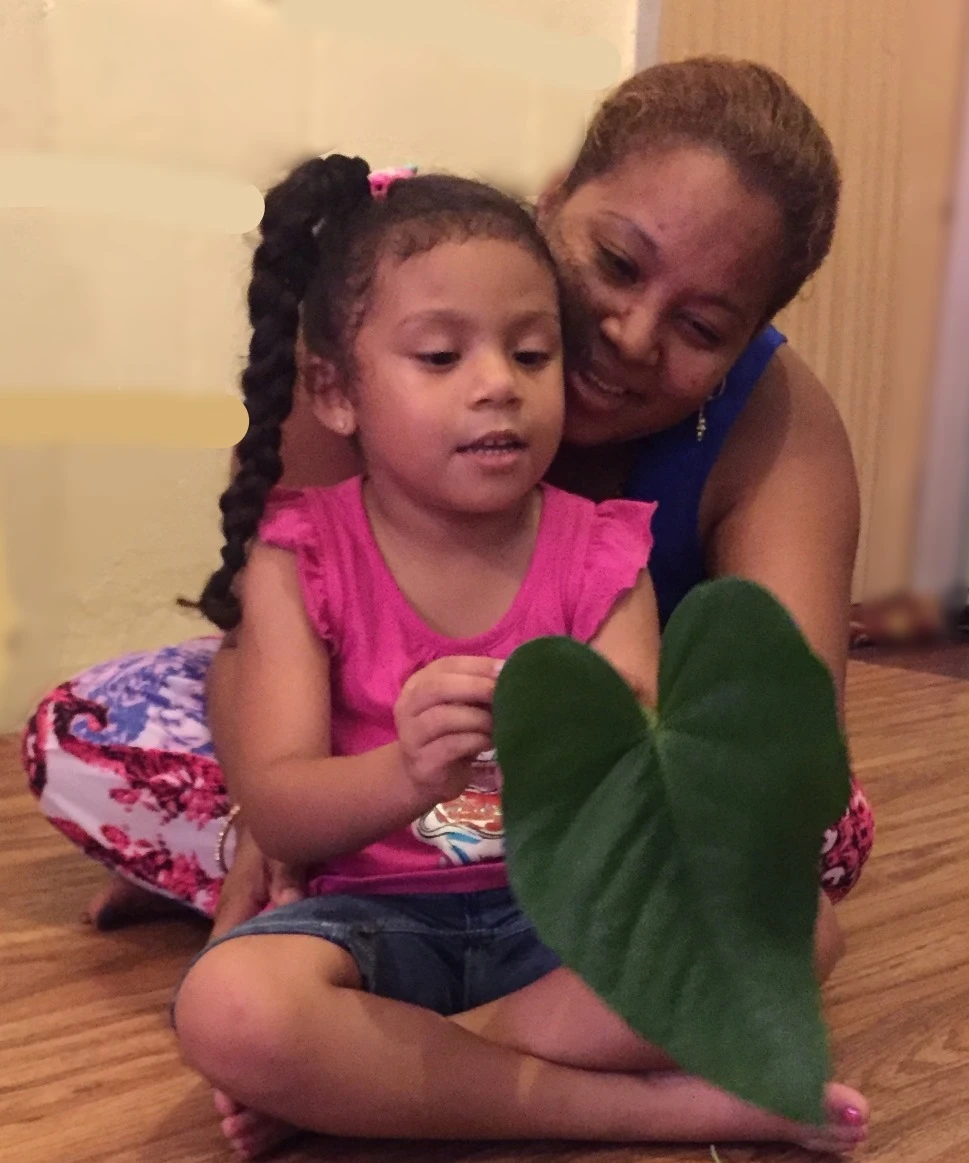
Attention. Listening. Communication. Coordination. Confidence. Persistence. Musical understanding. Language and cultural awareness.
When formal instrument study is right, your child has more to bring to it: a stronger ear, a more organised body, greater confidence and a deeper relationship with music.
When formal instrument study is right, they have far more to bring to it.
If that second picture sounds like the kind of foundation you want for your child, Active Allegros was built for families like yours.
Your next step
The Introductory Experience lets your family step inside the real class, with a clear next step if you decide to continue.
Still deciding?
Age, parent participation, music literacy, languages and what happens next: the practical questions are answered here.
Music expertise is only half the job. A preschooler does not need an adult music lesson made smaller.
Active Allegros combines professional music expertise with specialist early-childhood music and movement training. Preschoolers learn through hands-on, multisensory experiences, so the developing child guides the teaching, not pressure to produce a performance quickly.
That is the difference: we know the music, and we know how young children learn.
Absolutely. We simply do not start with a book.
Guided by Gordon Music Learning Theory, children hear, move, sing and make sense of musical patterns before seeing notation. Think phonics and reading: sound first, symbols later.
Active Allegros builds the listening, rhythm, coordination, confidence and musical understanding that make later instrument study stronger.
Some children are genuinely ready for more formal playing early, and we celebrate that. We simply do not make reproducing a complex song the benchmark for every 3- or 4-year-old.
Yes. One parent or guardian participates alongside the child, modelling listening, moving, responding and joining in while the specialist guides the class.
Your child watches you listen, move and respond, then carries those musical routines home. That consistency helps the learning stick, and parents and teachers often notice the difference in listening, settling and attention.
Children encounter language through songs, listening and playful interaction, including English, Trini English, Spanish, French, German, Brazilian Portuguese, Hindi and Mandarin Chinese.
The goal is not instant fluency. It is to keep young ears flexible and comfortable with different sounds, accents and ways of communicating.
Yes. Active Allegros is built on Musikgarten®, an internationally established early-childhood music and movement curriculum used around the world.
Alabanza MusicVersity is the only licensed Musikgarten® provider in Trinidad & Tobago.
Yes, it is worth asking. Placement is based on developmental fit as well as age, and we can guide you toward the most appropriate starting point.
If your child will turn 3 by early November, or is already in preschool, you’re welcome to get started. There’s no need to rush.
If your child is older than 5 and Active Allegros may still be the better developmental fit, reach out. We’ll help you determine the most appropriate starting point.
That is exactly why the programme uses movement as part of the learning. Children walk, stop, start, balance, listen, respond, watch and take turns rather than being expected to prove focus by sitting still for long stretches.
Children can also watch before joining in. Confidence is built through repeated, low-pressure participation.
No. You are not there to perform for the class. Your role is to model listening, moving, responding and participating so your child has a familiar adult showing them that the experience matters.
Families can begin with an Introductory Experience before deciding on Membership. In-person and live online starting options are available.
Active Allegros follows the MusicVersity programme schedule. Families are placed into an available class time for the programme period, with the schedule remaining consistent once placement is confirmed.
No. Children do not need previous music lessons or formal musical experience to begin Active Allegros.
Yes. We partner with daycares, preschools and primary schools across Trinidad & Tobago to bring this programme into the school day. Learn how to bring it to your preschool →
You do not need to commit to the full MusicVersity year to take the first step. Begin with the Introductory Experience and experience Active Allegros from inside the programme.
Your Confidence Guarantee reduces the risk of getting started, and many families continue from one stage to the next, so some age-specific places are already held before new families begin.
Want your child to have this experience at preschool? Ask us how to bring it to your preschool →