“The words she could identify way beyond her age.”
Ronald · Dad · daughter began in the early years

For Daycare · Preschool · Primary Schools
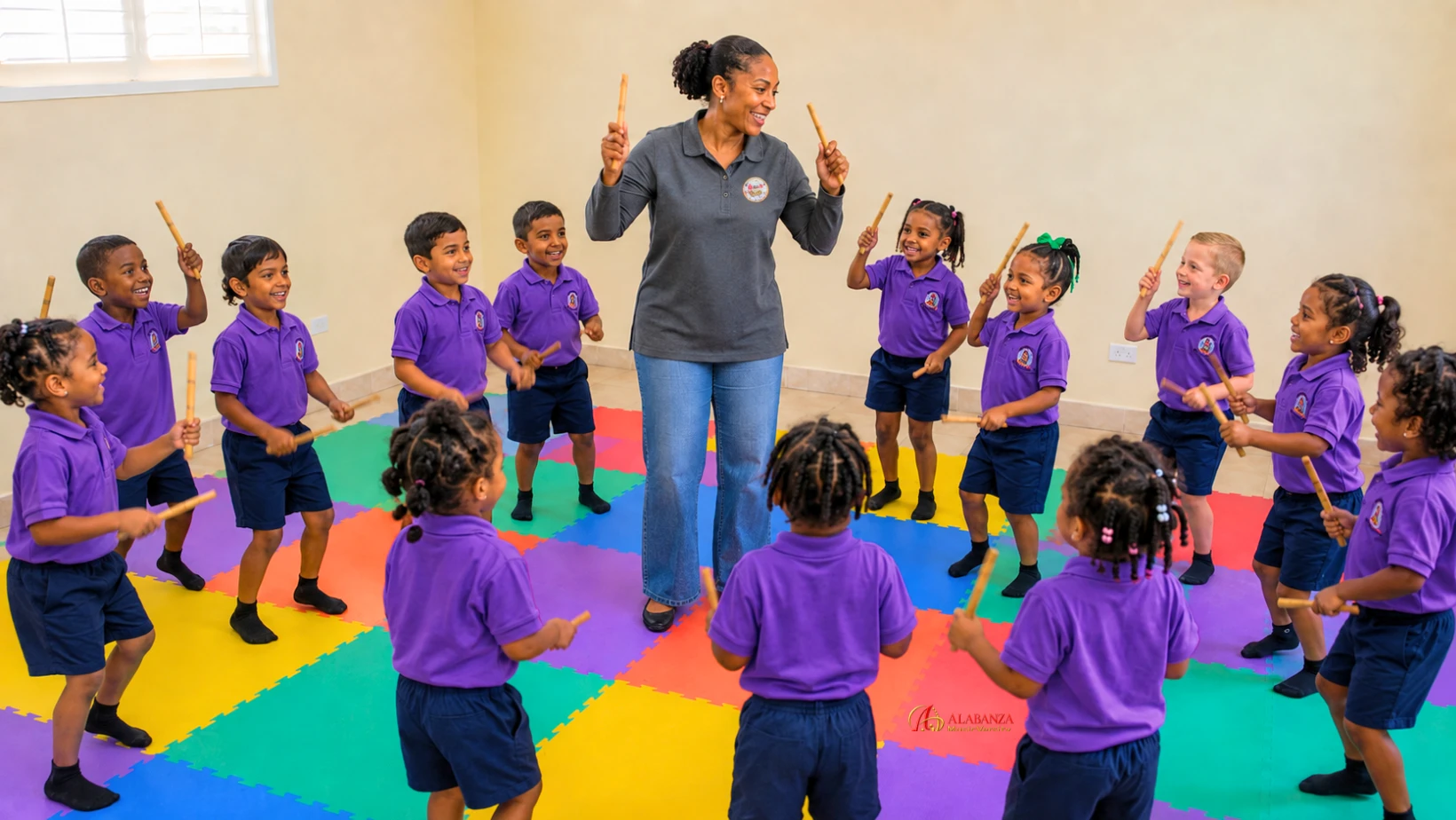
Children who communicate with greater confidence.
Children who move more comfortably between languages and cultures.
Children who can listen, respond, collaborate, regulate themselves and participate with growing independence.
Teachers with musical tools they can use for transitions, focus, connection and classroom rhythm.
Parents who can see that what their child is gaining goes far beyond singing a few songs.
And a school that can confidently say:
We are not simply offering another enrichment activity.
We are developing confident communicators, creative thinkers and culturally grounded, globally minded young people.
The Three Ingredients
 Music
Listening · Rhythm · Real Musicianship
Music
Listening · Rhythm · Real Musicianship
 Movement
Coordination · Regulation · Focus
Movement
Coordination · Regulation · Focus
 Multilingualism
Communication · Connection
Multilingualism
Communication · Connection
Research-backed · Age-appropriate · Trinidad & Tobago
What Families Notice
Confidence. Communication. Musical independence. Hear from two families who have watched those changes unfold over time.
Ronald · Dad · daughter began in the early years
Amanda · Alabanza parent
We Make Music in Many Languages
Caribbean · Latin American · Global Culture, including Parang · Calypso · Chutney · Folk · songs, rhythms and stories from around the world

International Curriculum · Years of Progression
Musikgarten® is a leading early childhood music and movement curriculum, taught in studios across the United States, Canada and 15+ countries including Germany, Singapore, Australia and Taiwan.
We are Trinidad & Tobago’s exclusive licensed provider of Musikgarten®.
Its multi-year sequence grows from early childhood into school-age musicianship, so each stage prepares for what comes next rather than standing alone as a one-off activity.

Purposeful by Design
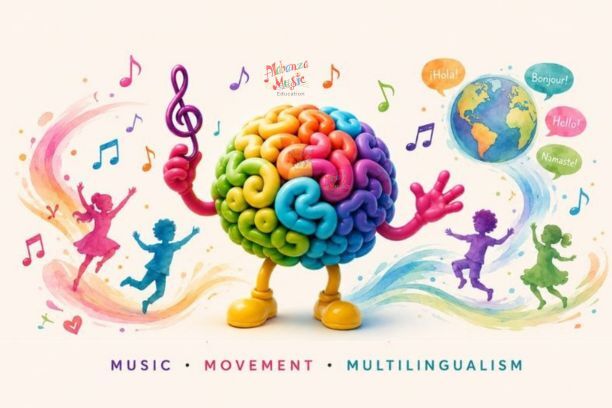
Children are listening, predicting, moving, remembering, communicating and coordinating in real time. Music, movement and multilingual learning let those systems work together while children are actively engaged.
What Makes Our Method One of a Kind
Schools can offer many kinds of music experiences. We structure ours around Developmentally Appropriate Musical Practice (DAMP), combined with Content-Based Language Teaching (CBLT), where language isn't taught, it's acquired.
| Area | Typical Add-On | Our Approach |
|---|---|---|
| Music | Songs and participation. | A child who hears, understands and creates. |
| Movement | A fun break. | A child with coordination and focus. |
| Language | An occasional song. | A child who moves naturally between languages. |
| Culture | Seasonal activities. | A child rooted in Caribbean and global culture. |
| Teacher role | Supervise or assist. | A musical companion, all week. |
| Beyond class | Resumes next session. | Reinforced at school and at home. |
| Progression | A stand-alone activity. | A child ready for musicianship and instruments. |
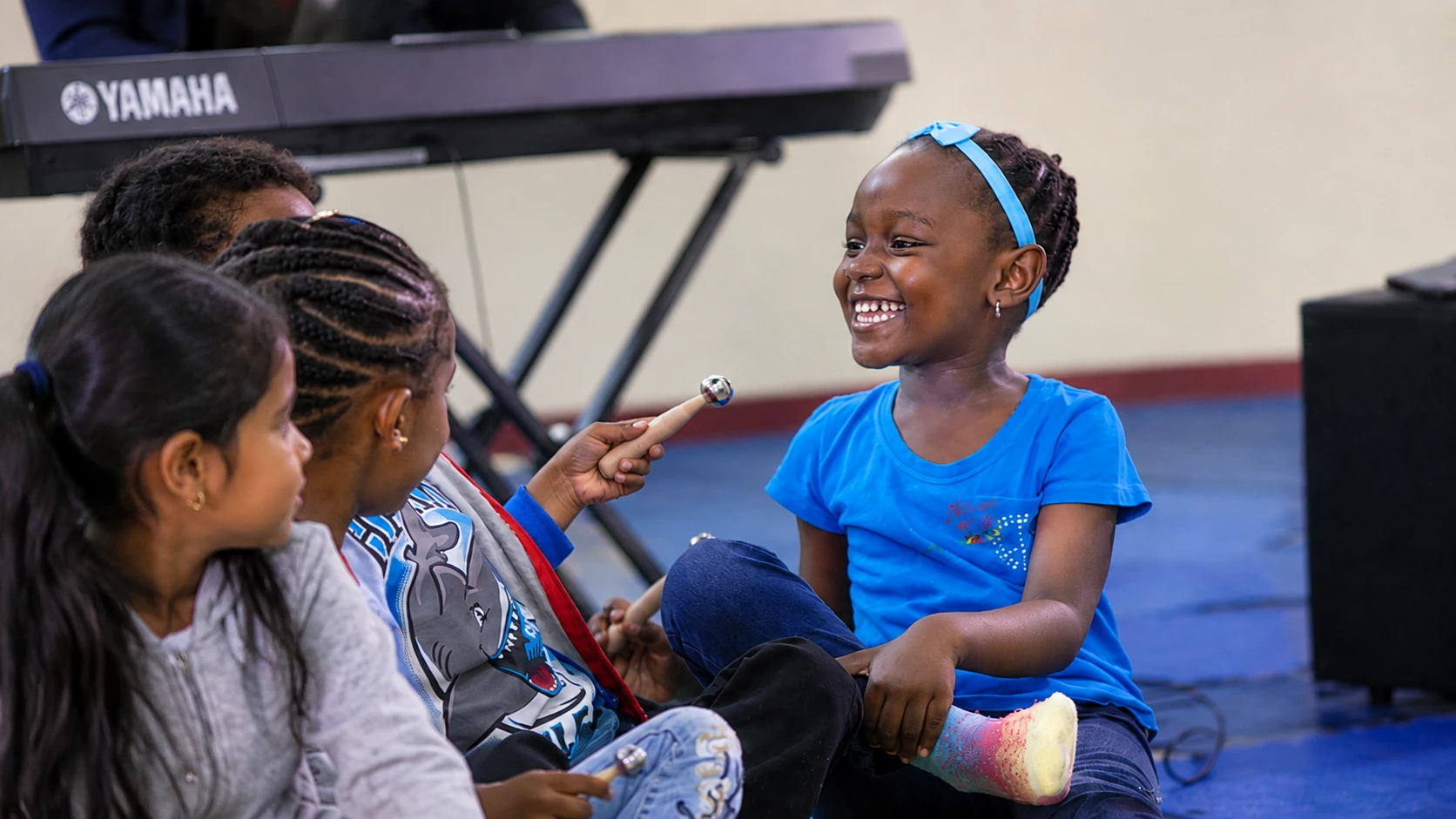
Daycare + Preschool
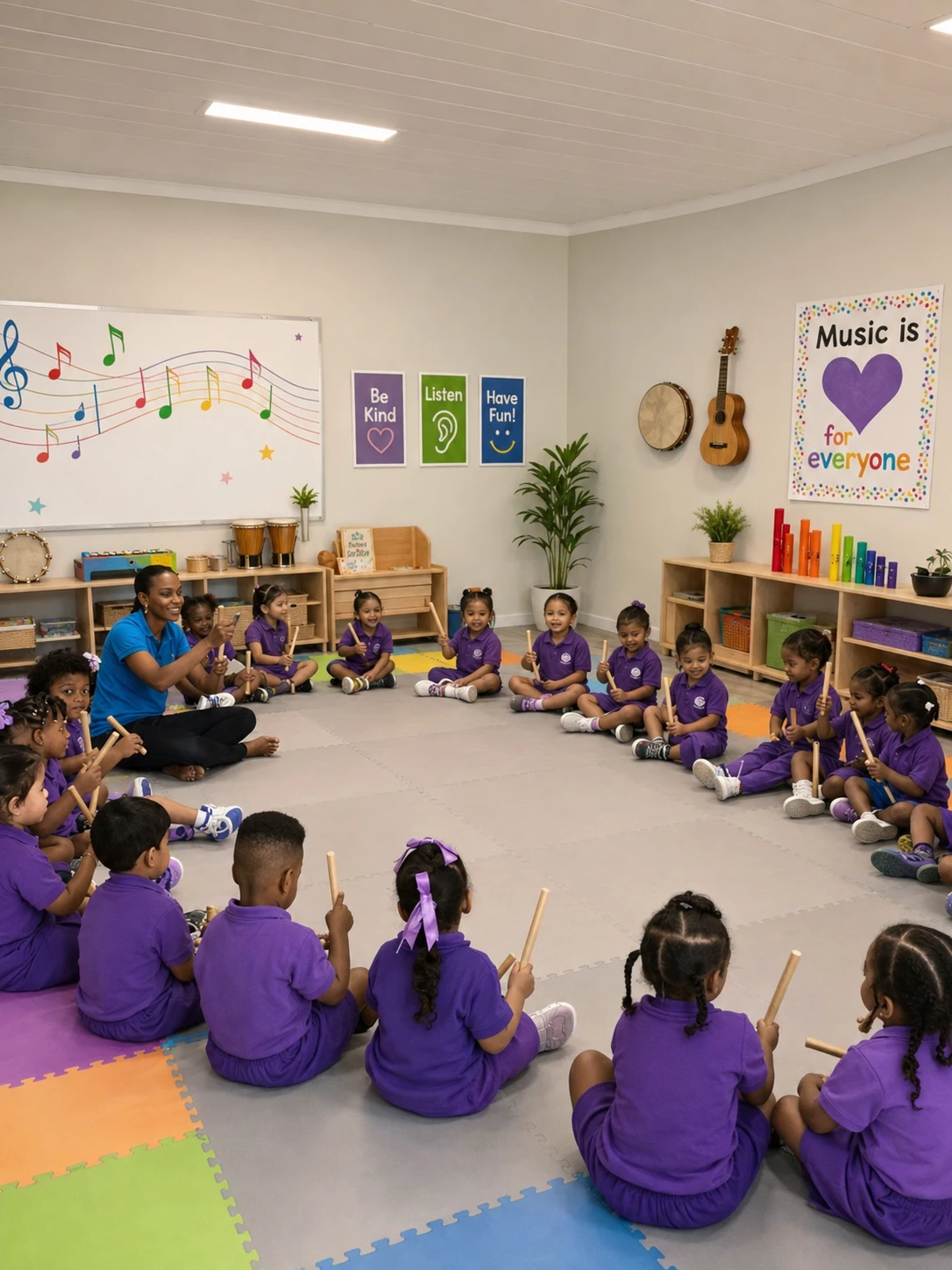
Active, sensory-rich and full of repetition, using voice, movement, instruments, stories and multilingual musical play.
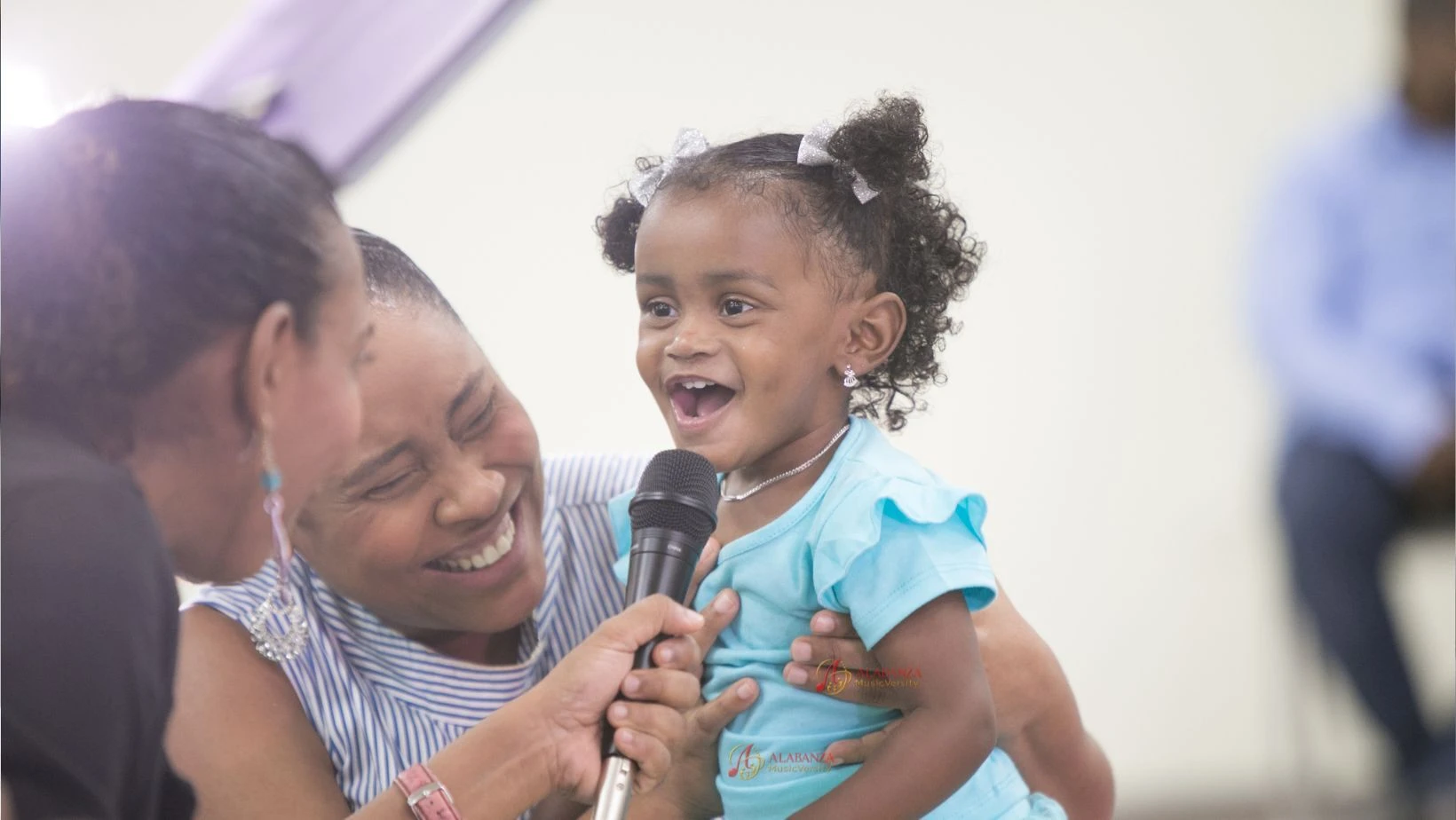
Paced for babies and toddlers, with one parent or guardian bonding alongside the child through touch, voice and rhythm.
Gentle, repetitive and sensory-rich, building the earliest foundations for listening and trust.
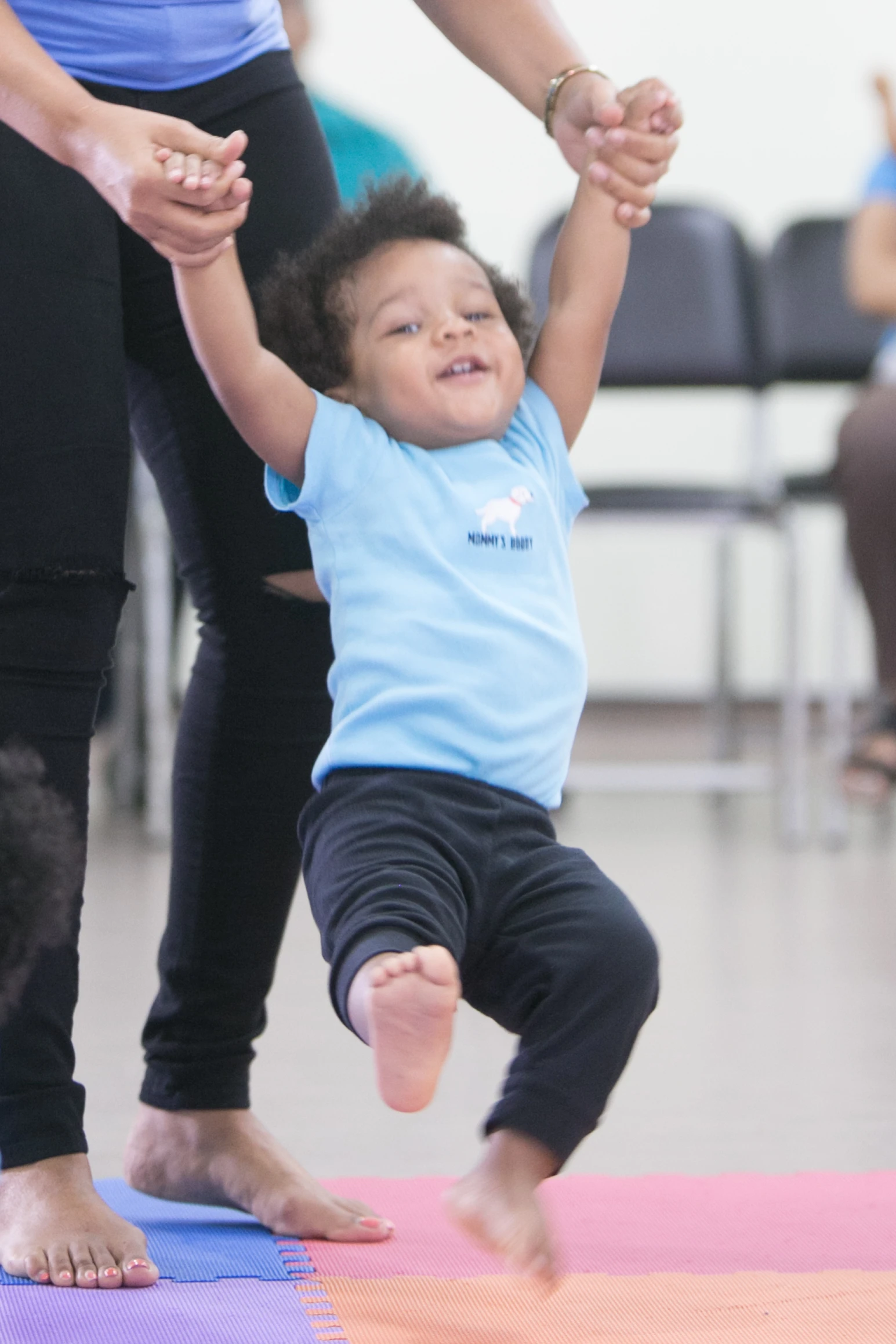
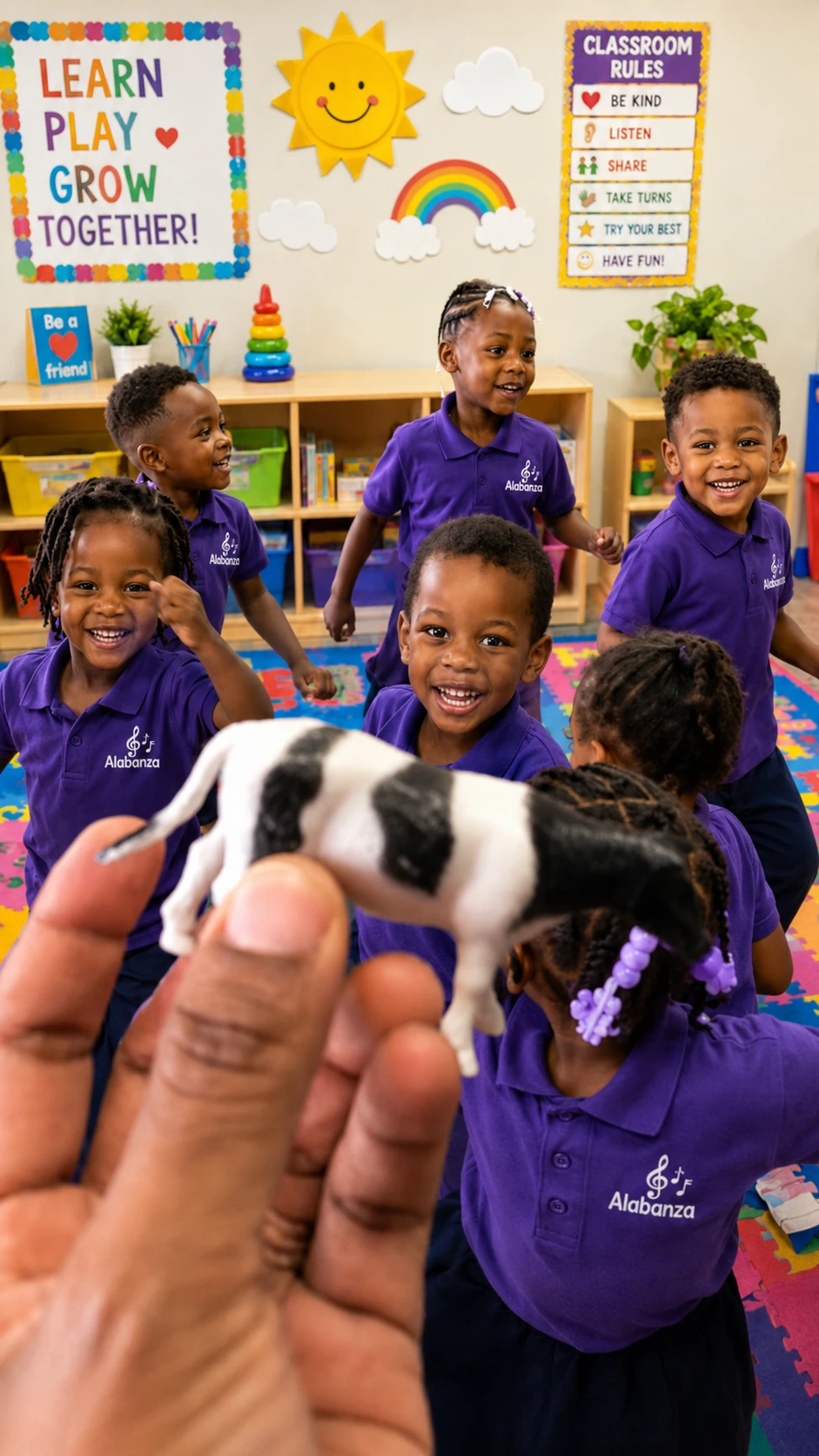
Paced for preschoolers, with one parent or guardian participating alongside the child and modelling listening, moving, responding and joining in.
Activities vary by lesson and stage, but the experience stays active, musical and connected.
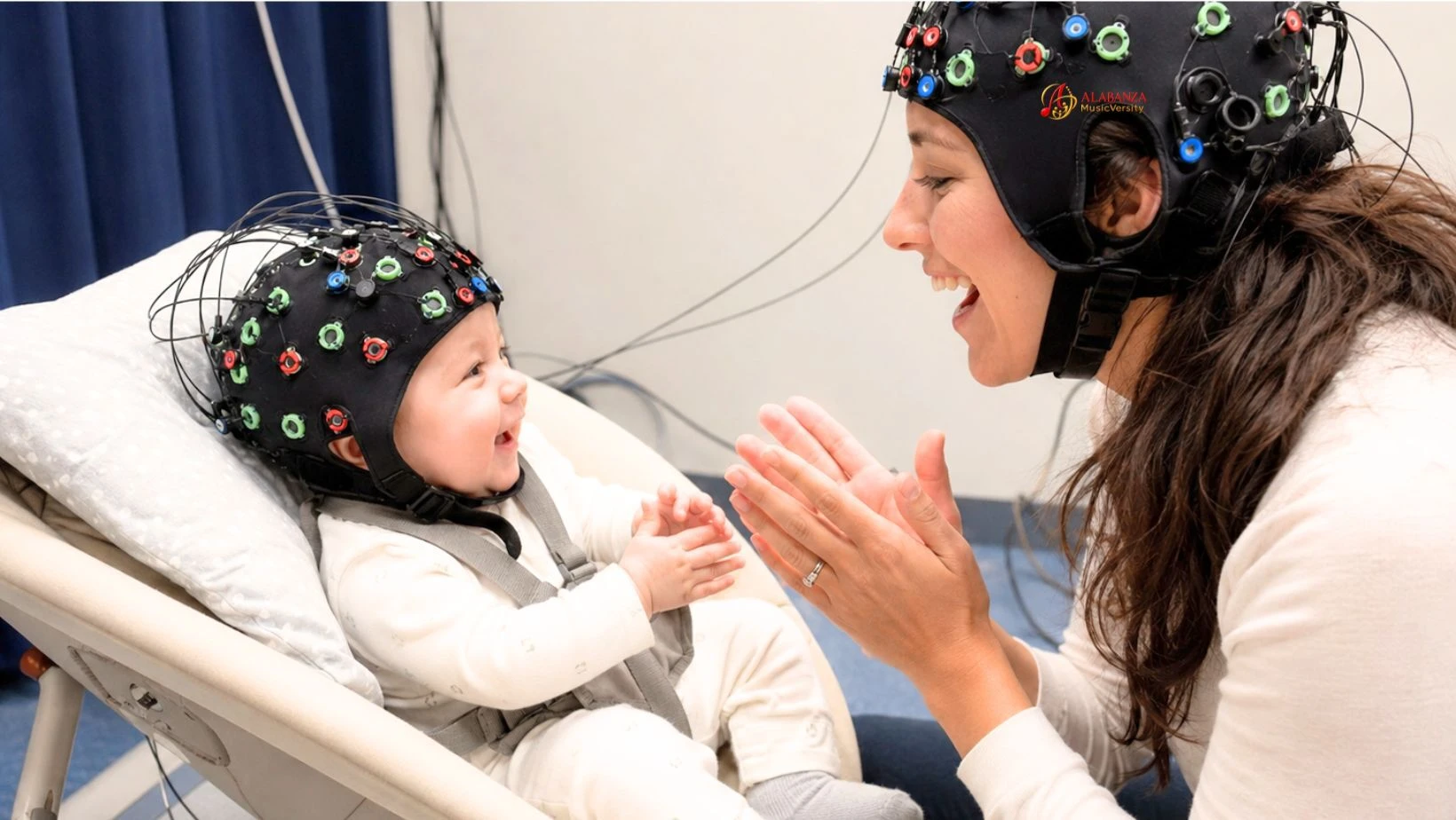
Long before a child can read music or play an instrument, the developing brain is already responding to rhythm, pattern and musical interaction.
“Music training significantly improved inhibitory control, working memory and cognitive flexibility.”Systematic review & meta-analysis · Preschool music training, ages 3–6 · 2024
In a 2026 brain-imaging study of babies just 0–5 days old, newborns showed stronger responses to both song and speech than to humming. Their brains processed song in strikingly similar ways to speech, suggesting that singing may already be meaningful for early speech perception and language development.
Young children learn through repetition, sensory input, movement, imitation, interaction and meaningful context. Music lets those systems work together instead of asking a child to process learning in only one way.
See Daycare + Preschool in Action
Three real glimpses of how music, movement, language and culture come together for our youngest learners.
Learning That Carries Beyond Class
Once songs, rhythms and language become familiar, children carry them into everyday life, reusable by teachers and families for transitions, focus, connection and memory.
Familiar music becomes part of family routines, connection and reinforcement beyond class.
Multilingual learning begins to show up naturally in everyday life, even during maths homework.
Primary
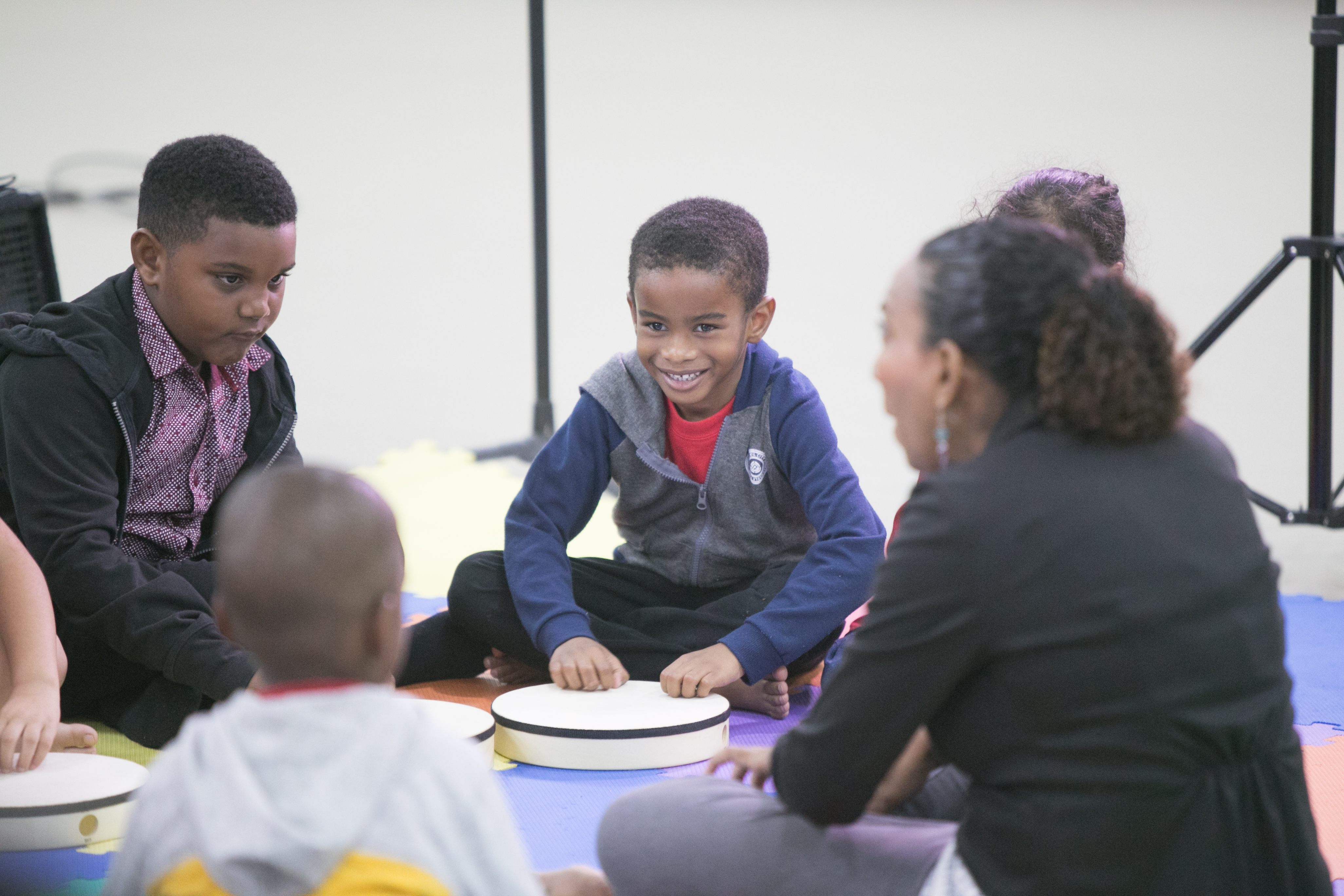
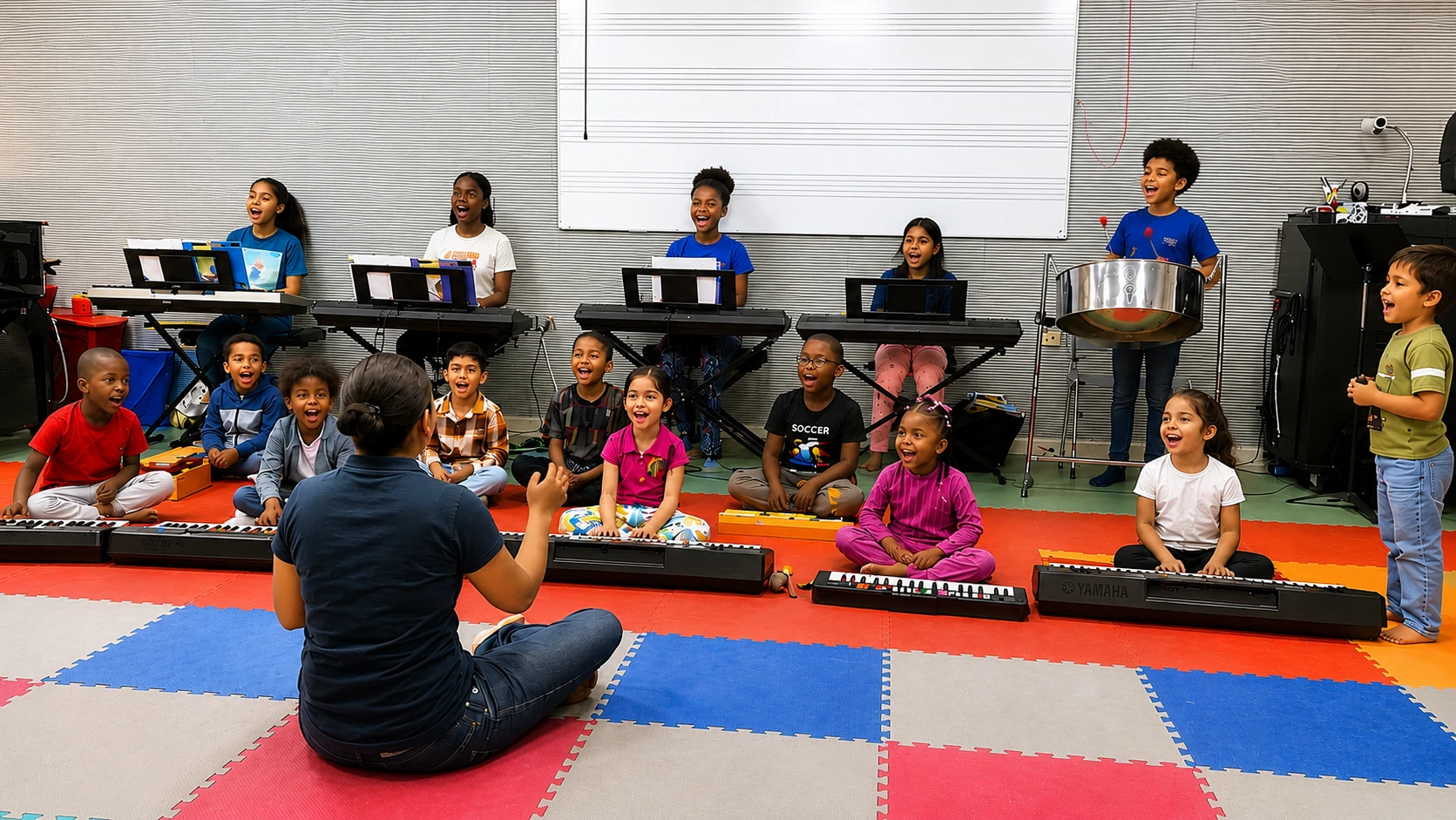
As children grow, we build stronger listening, voice, rhythm, keyboard awareness, ensemble skills, creativity and music literacy, while keeping music connected to culture.
“By 6–7, play-based music outperforms sitting still with an instrument.”Scientific Reports · Music playschool study, ages 5–7 · 2018
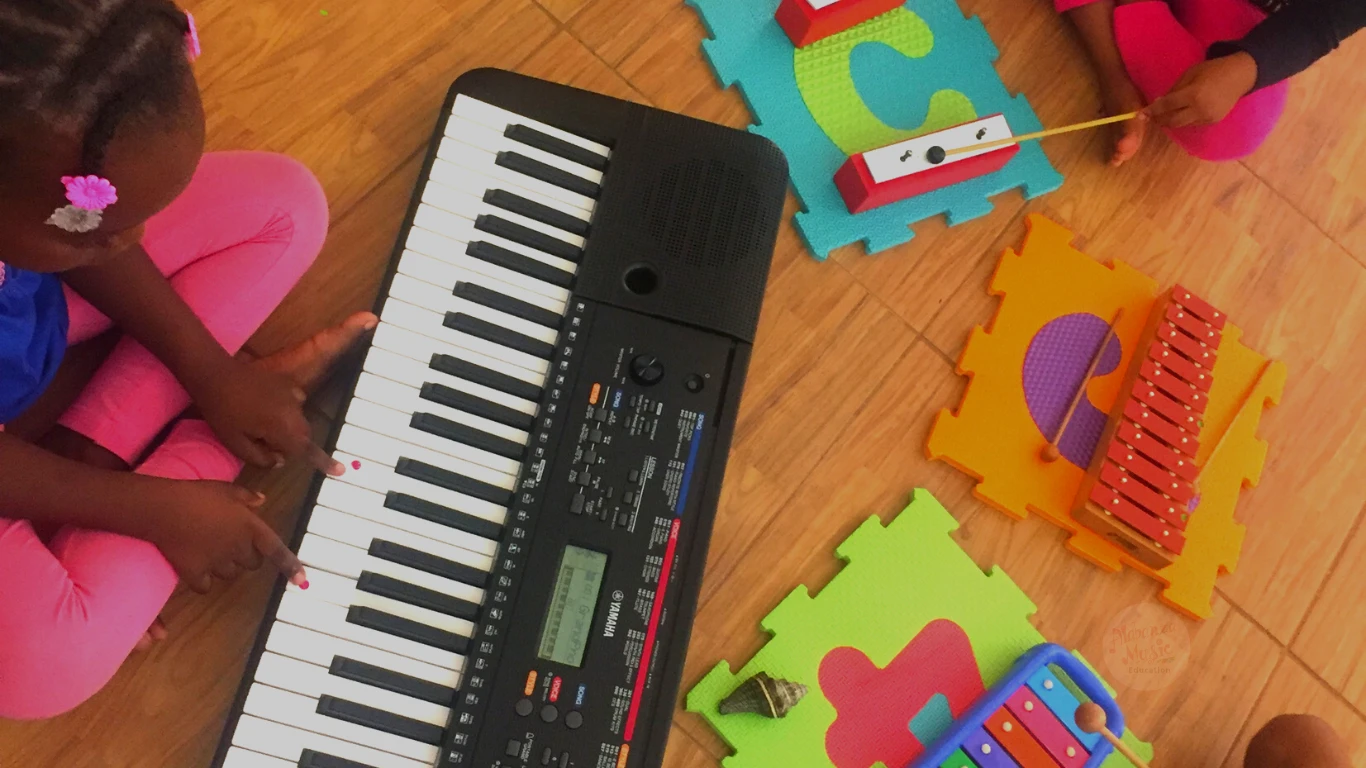
A pre-piano class focused on building a strong musical foundation through play-based learning, setting the stage for future instrument mastery while developing vital cognitive skills.
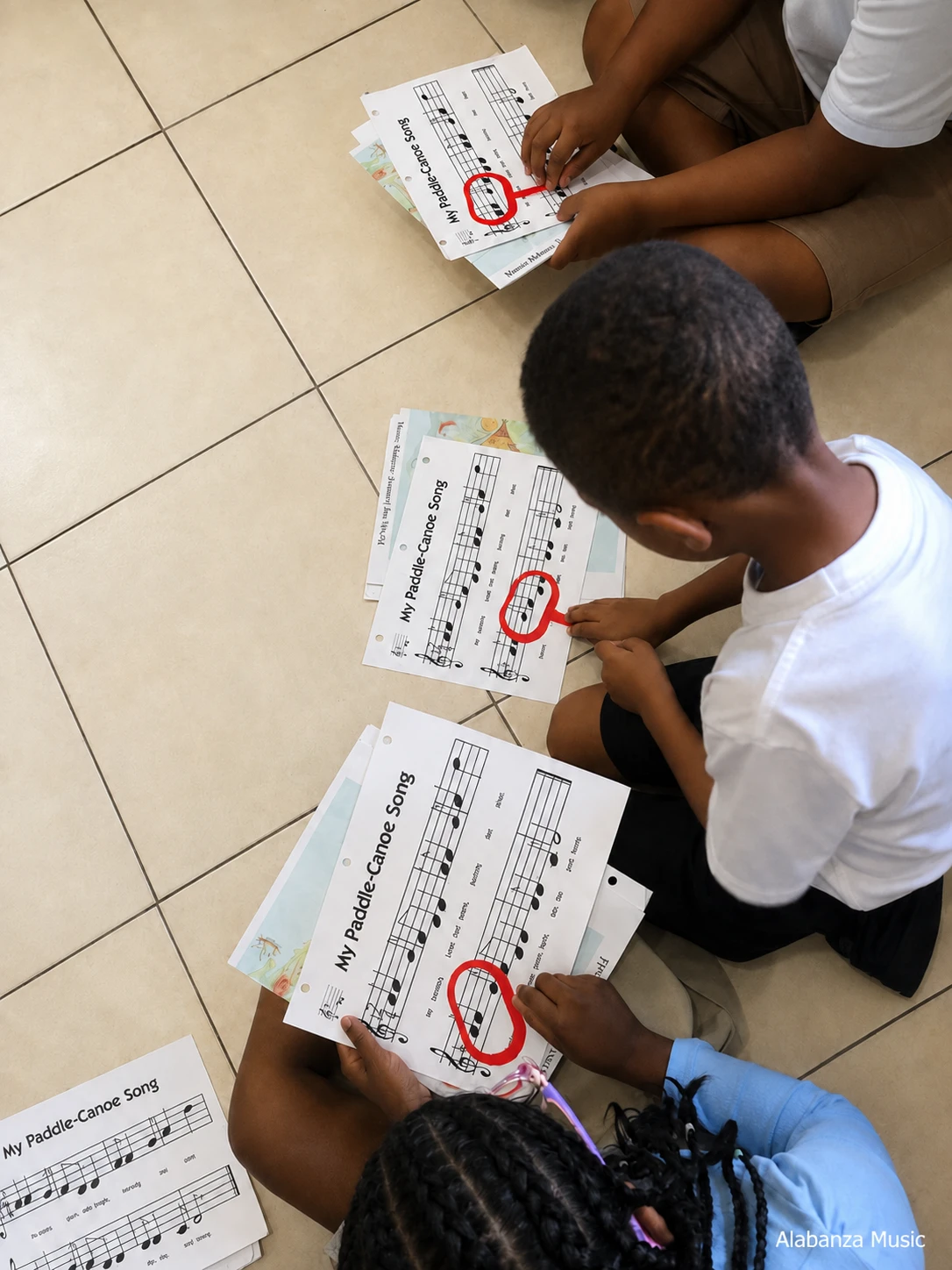
Children don't just learn songs, they live them. Through interactive music-making, storytelling, movement and games, they explore new cultures and languages while building true musicianship.
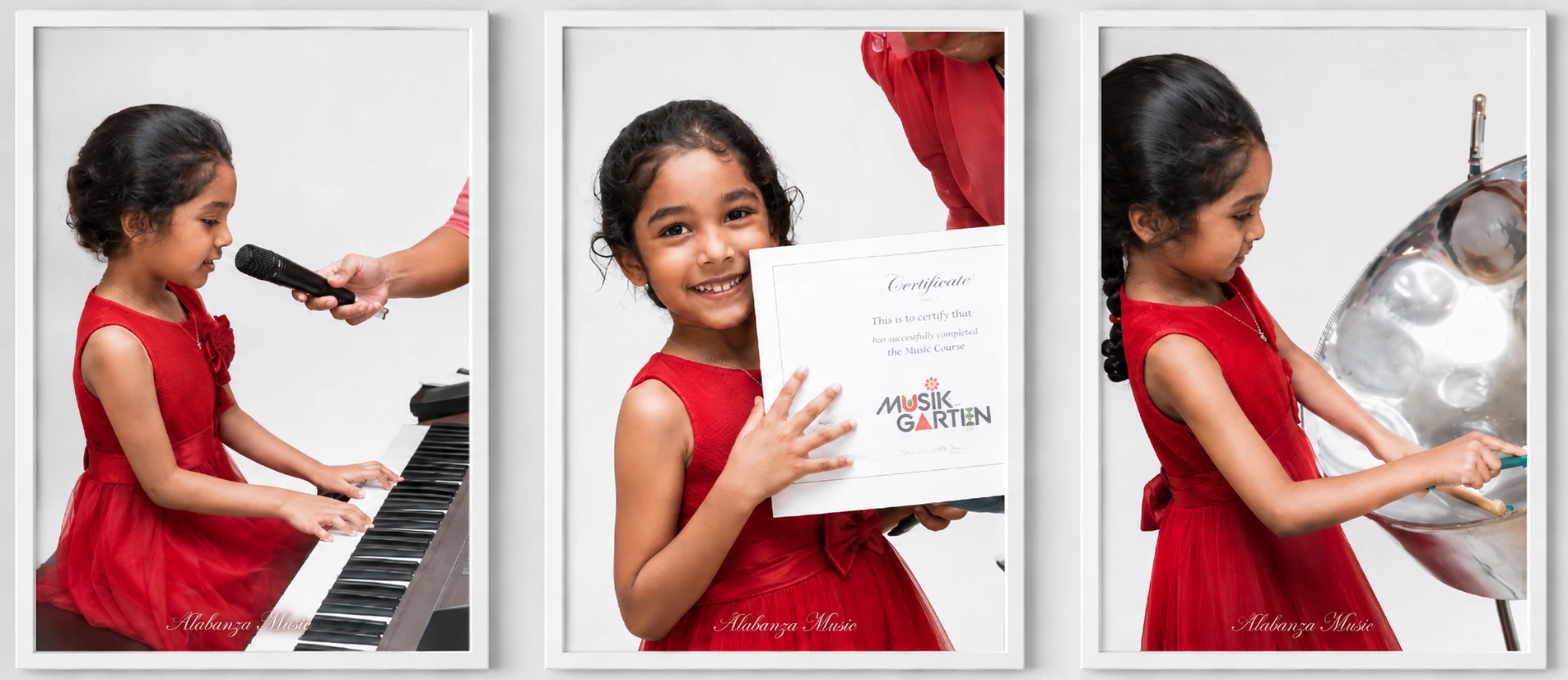
Aural-first musicianship across Piano, Voice and Tenor Pan, for children ready to move beyond reproducing pieces and learn to hear, understand, read, sing, improvise, create, accompany and perform.
More Than Performance
Playing an instrument is wonderful, but there is something that matters even more.
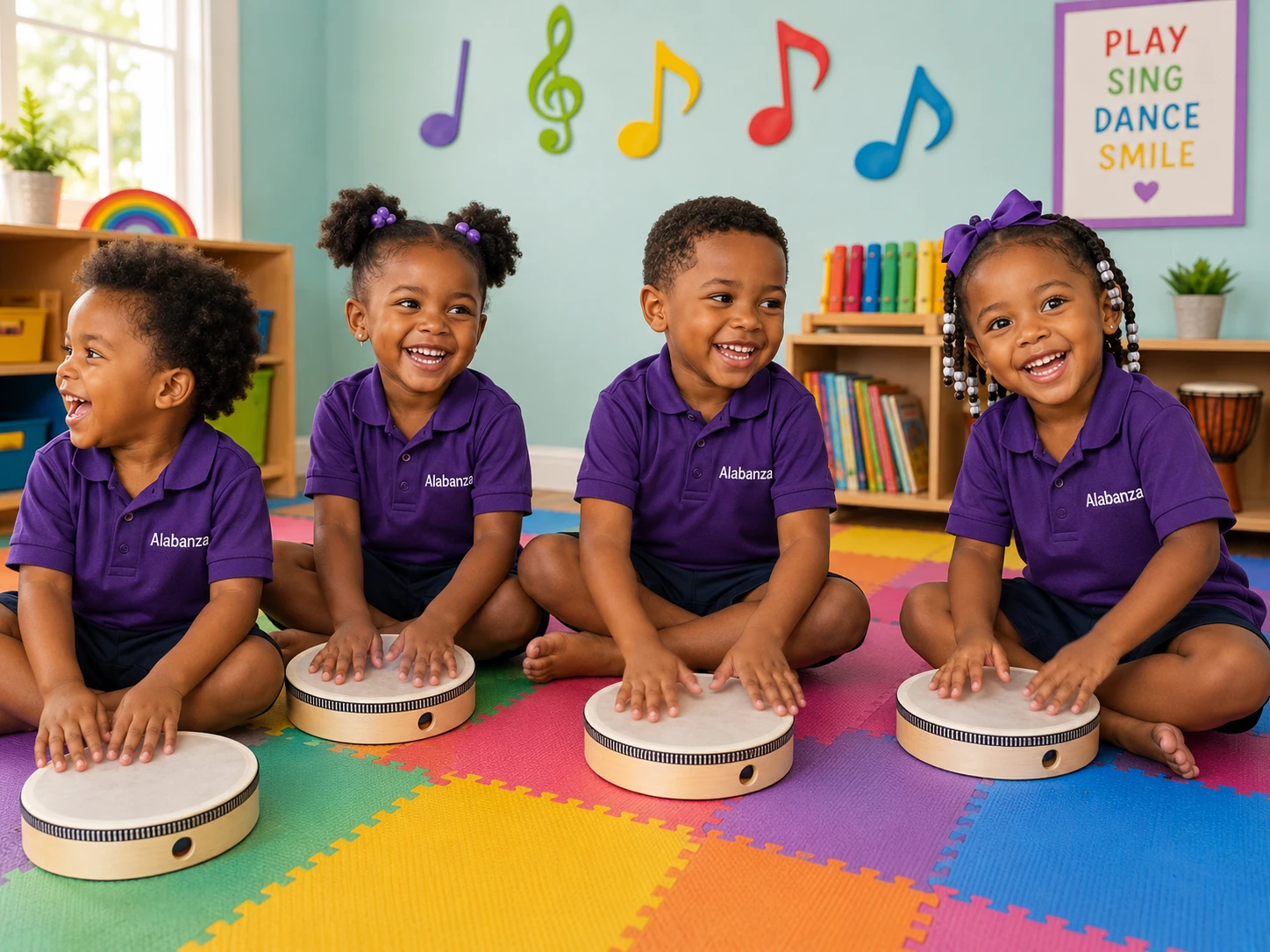
We want children who can eventually perform with understanding, but the bigger goal is the whole child growing through music: the ear, voice, rhythm, movement, language, culture, curiosity and confidence to understand, create and connect.
Where It All Comes Together
By Primary, children are bringing together ear training, voice, rhythm, movement, language, culture, ensemble skills and growing independence. The performance is what we can see; persistence, collaboration, confidence and resilience are what have been built underneath it.
What Families See Over Time
Families often notice confidence, independence and musical engagement showing up well beyond the session itself.
“I’ve seen her go from clingy and resistant at age 3 to independent, enthusiastic, and sometimes Ms. Lisa’s assistant with the little ones, at 12 years old.”Candy L. · Premium Member · 9 years in MusicVersity
“As a first-time parent, I wanted to be intentional about what I exposed my daughter to. She was very receptive to the class and, most importantly, had fun while learning about music and rhythm.”Kayla · Parent with newborn
Ready to See It in Your School?
We’re currently accepting a limited number of school partners for the September–December 2026 term.
What School Partners Notice
By the time children step onto a stage, the real win is bigger than the song. They have practised listening, persistence, collaboration, confidence, cultural identity and the resilience to keep going when something is challenging.
That gives the school something meaningful to showcase: not simply children who performed, but young people who grew through the process.
Schools + Organisations We’ve Served
Just to name a few:
Designed around how children learn, with clear transfer beyond the session.
Why the Specialist Matters
Songs, instruments, movement and language can look simple. The difference is specialist-led sequencing: knowing what to listen for, when to challenge, when to repeat, and how to connect what children are doing to communication, regulation, coordination, musicianship and cultural understanding.
For School Leaders
We recommend the structure after looking at age groups, enrolment, delivery format, materials and what you most want children to gain.
For daycare, preschool and school communities that want the programme embedded into the school day.
Useful for online school communities and appropriate primary-age group formats.
Investment details are shared privately after we understand the age groups, format and structure your school needs.
Common Questions
Not for young children. Not in the way you think. Strong listening, rhythmic, vocal and movement foundations make later, more complex instrumental learning more meaningful and independent.
Copying is only one skill. We want children to hear, understand, remember, respond and create, not depend on the page or teacher for every next move.
No. They are part of the learning itself, building timing, phrasing, listening, expression, coordination and cultural understanding.
No. We lead the specialist musical programme. Teachers participate as musical companions and learn simple ways to reinforce familiar material.
Where required, we recommend age-appropriate curriculum resources and instruments so children can revisit the learning between classes.
Yes. Where home resources are available, families are encouraged to use them. Schools can also share simple parent reinforcement through their existing communication channels.
Yes. Appropriate primary-age programmes can be delivered as live interactive groups, with group size kept manageable for meaningful musical participation.
Children completing eligible Musikgarten® courses can receive an official Musikgarten® Certificate of Completion. Other pathways have their own progression milestones.
Music · Movement · Multilingualism
Parents can ask whether the programme is available at their school. School leaders can talk with us about bringing it to their community.
Want your child to have this experience at school? Ask us how to introduce the programme to your school.
Bring This to My Child’s School →Tell us about your students, goals and school structure and we'll recommend the most appropriate starting point.
Preview the Programme →The Bigger Outcome
Raising a generation of children ready for the real world through a research-backed, internationally renowned neuromusical programme designed for growing minds.