
“Miss Lisa did an excellent job of breaking down the essence of music in a way that felt simple, engaging, and meaningful. There’s a lovely balance between structure and creativity, and it really gave me confidence in what’s to come.”A. BaboolalMusicVersity parent
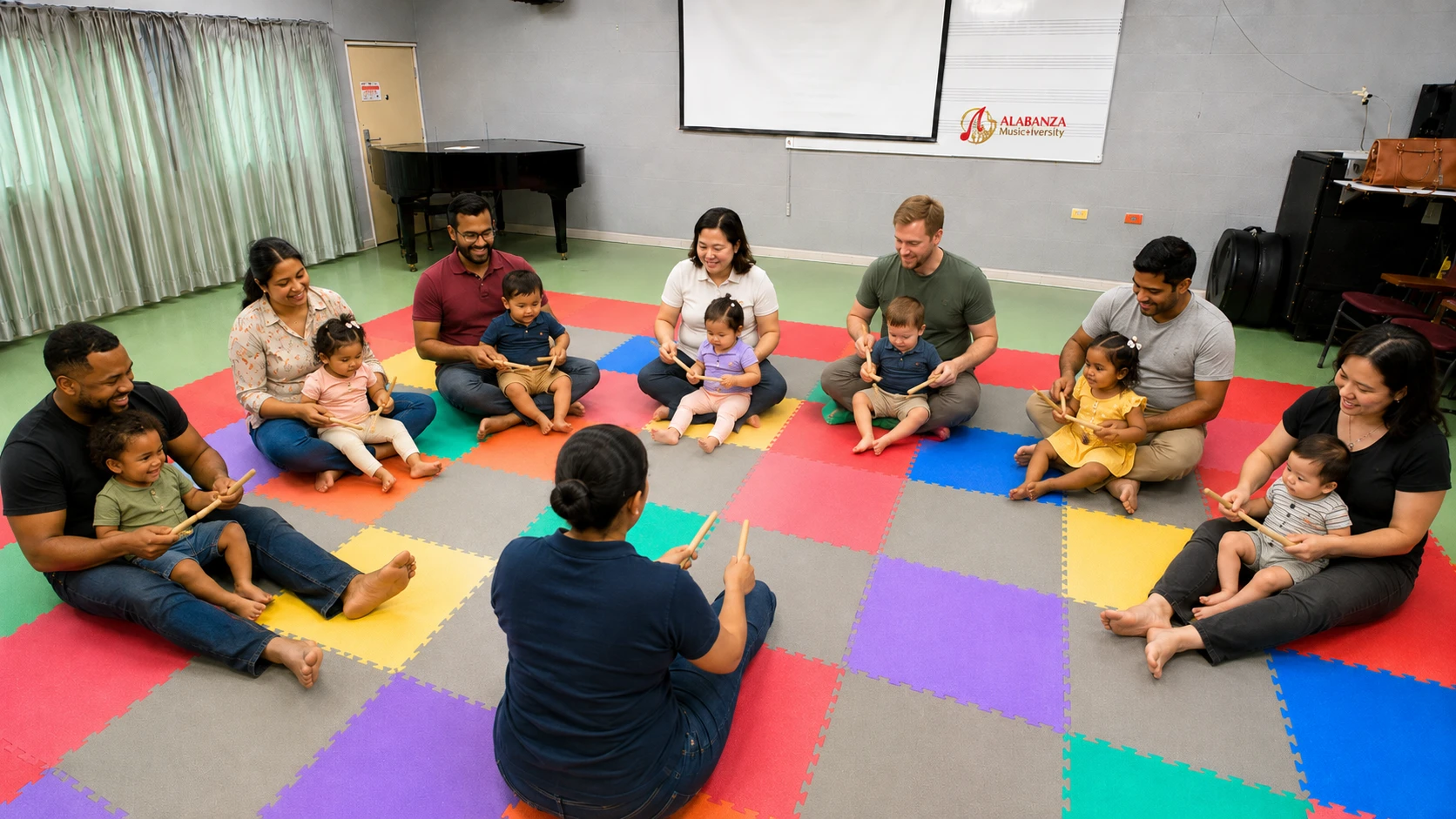
For parents joining MusicVersity
Don’t just attend the class. Know what you’re building.
Your MusicVersity experience starts here. Before the first class, understand what we are building, why your role matters, and what most parents never learn to notice.
T&T ExclusiveLicensed Musikgarten® provider
Board-CertifiedEarly Childhood Music & Movement expertise
25 YearsServing families through music education in T&T
Classes HostedDCFA, U.W.I. & Alliance Française
Live Online & On Demand
Live Online & On Demand
From parents who watched first
Parents tell us this changes what they notice.
“I always say ‘good job’ when my son does something, but I learned that being specific helps them narrow down on that skill and develop it even more. I never really thought about it that way before.”J. LalMusicVersity parent
This is what puts you ahead of the rest.
Most parents are simply told where to show up. We teach you what to notice, why it matters and how to support it. That insight puts MusicVersity families ahead from the very first class, with a depth of specialist parent education available nowhere else in the Caribbean.
Now see what we mean
Your Parent Education MasterClass
Give us about one hour before your first class. We’ll take it from here.

PARENT EDUCATION · ZOOM RECORDING
Start Parent EducationApprox. 1 hour · Full Zoom recording · Complete before your first class
What you’ll walk away with
After the video, you’ll know what to look for.
Parent Education gives you a better lens. You arrive understanding what the activity is building and the small signs of progress that are easy to miss when all you see is “music class.”
1
See the purpose
Recognise what listening, movement, waiting, language and musical play are practising underneath the surface.
2
Notice progress earlier
Spot meaningful changes in communication, coordination, confidence, self-control and musicianship.
3
Carry one thing home
Use a song, rhythm, movement cue or more specific encouragement to extend the learning naturally.
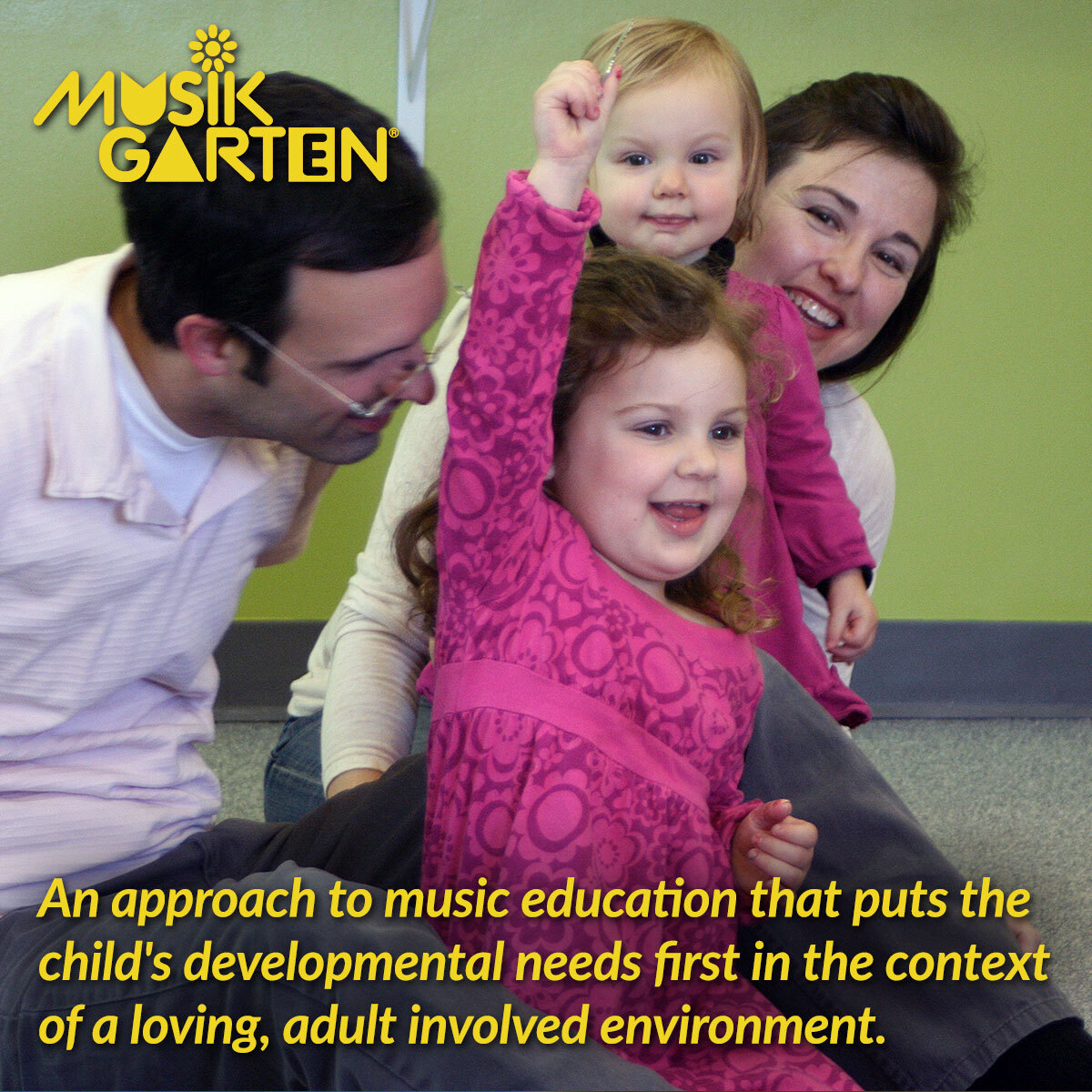
The Musikgarten® foundation
A developmental pathway built for how young children actually learn.
Our early-years curriculum builds on the internationally established Musikgarten® approach, combining listening, singing, movement, rhythm, instruments and musical exploration before children are rushed into formal note-reading.
Our method in three parts
What looks like play is deliberately doing more.
We do not teach music in isolation. We weave music, movement and multilingual interaction together so children are listening, thinking, coordinating, communicating and making meaning at the same time.
Music
Listening, pitch, pulse, rhythm, pattern, memory and musical thinking develop before we rush children to depend on the page.
Movement
Starting, stopping, balancing, crossing the midline, waiting and moving in time give children repeated practice in coordination and control.
Multilingualism
Songs, chants and call-and-response expose the ear to different sound systems, rhythms and ways of expressing meaning through culture.
Why we begin this early
Because the foundations arrive before formal lessons do.
Listening, timing, movement, communication and musical thinking are already developing long before a child sits for formal instrument study. We meet those abilities at the stage they are in, then build toward greater independence as the child grows.
BabiesToddlersPreschoolersEarly PrimaryOlder Children
The parent’s role is strongest in the early years and changes gradually as children become more independent musicians.
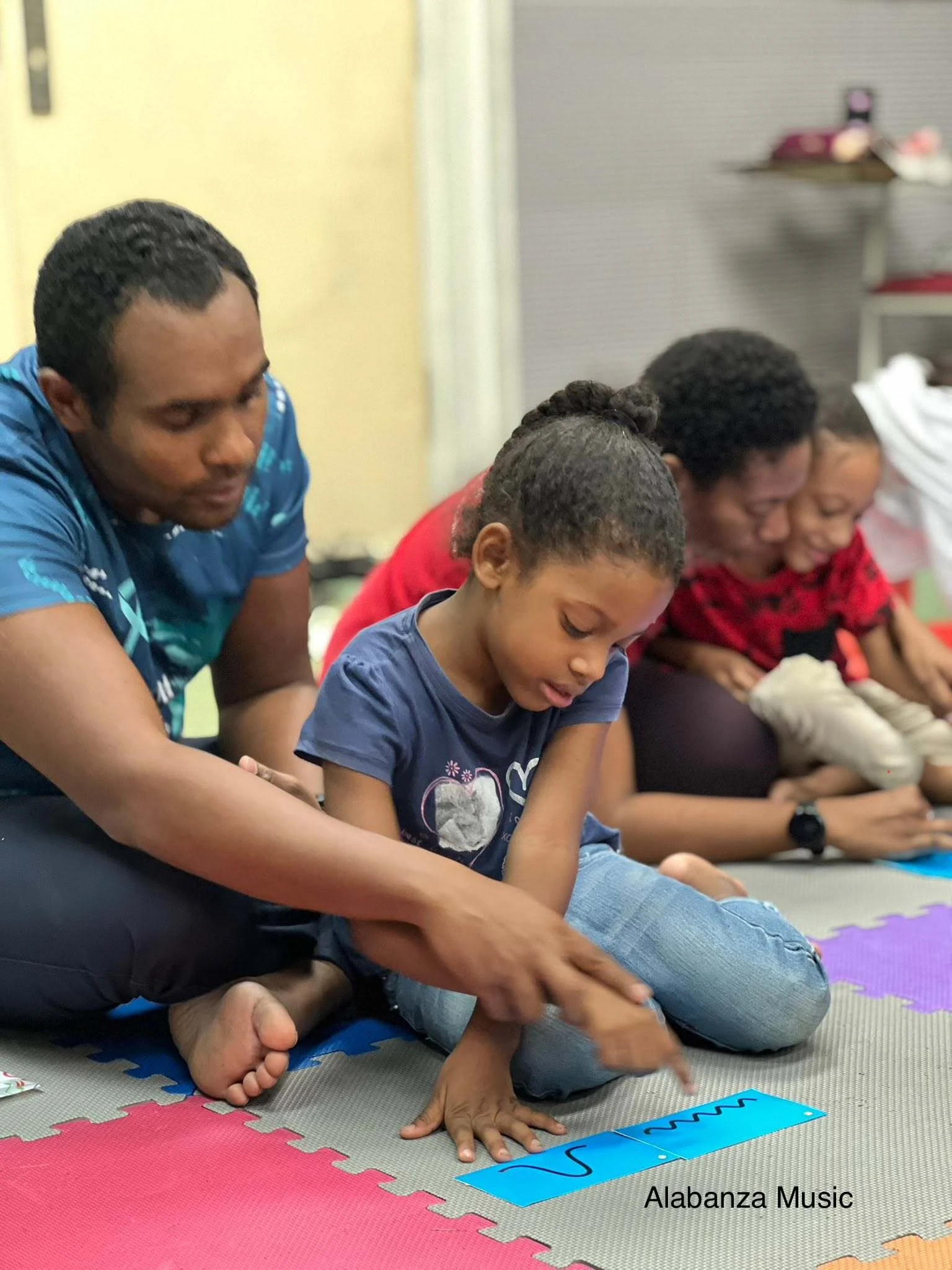
What you may start noticing beyond music class
You begin to notice the skills underneath the songs.
Once you know what to look for, progress is easier to recognise. It may show up in how your child listens, waits, coordinates the body, communicates, joins in, remembers patterns or begins making musical decisions more independently.
Listening & language
Responding to cues, vocalising, hearing sound patterns and using language with growing confidence.
Focus & self-control
Waiting, starting, stopping, staying with an activity and following increasingly complex musical cues.
Coordination
Moving in time, balancing, crossing the midline and coordinating voice, hands, body and instruments.
Confidence & independence
Trying, joining in, taking a turn and gradually doing more without needing an adult to do it first.
Real musicianship
Hearing before labelling, remembering patterns, improvising, creating and making musical choices rather than only copying from a page.
Real MusicVersity family
What changed at home
“I must say, this has been a MAJOR improvement.”
The Sinanan family shares what they noticed as the programme moved beyond the class itself. This is the kind of parent perspective we want you to understand before your own first session.
This is proof, not the Parent Education session. Your required first step remains the MasterClass on this page.
Your role changes as your child grows
You are not the audience. You are your child’s first musical partner.
You do not need to be musical. We simply want you participating in ways that help the child in front of you.
1
Join in
Model the listening, movement, voice and engagement you want your child to experience.
2
Model, do not test
Shared musical experiences matter more than constantly asking a child to prove what they know.
3
Let repetition work
What feels repetitive to an adult is often how a young brain stabilises a new pattern or skill.
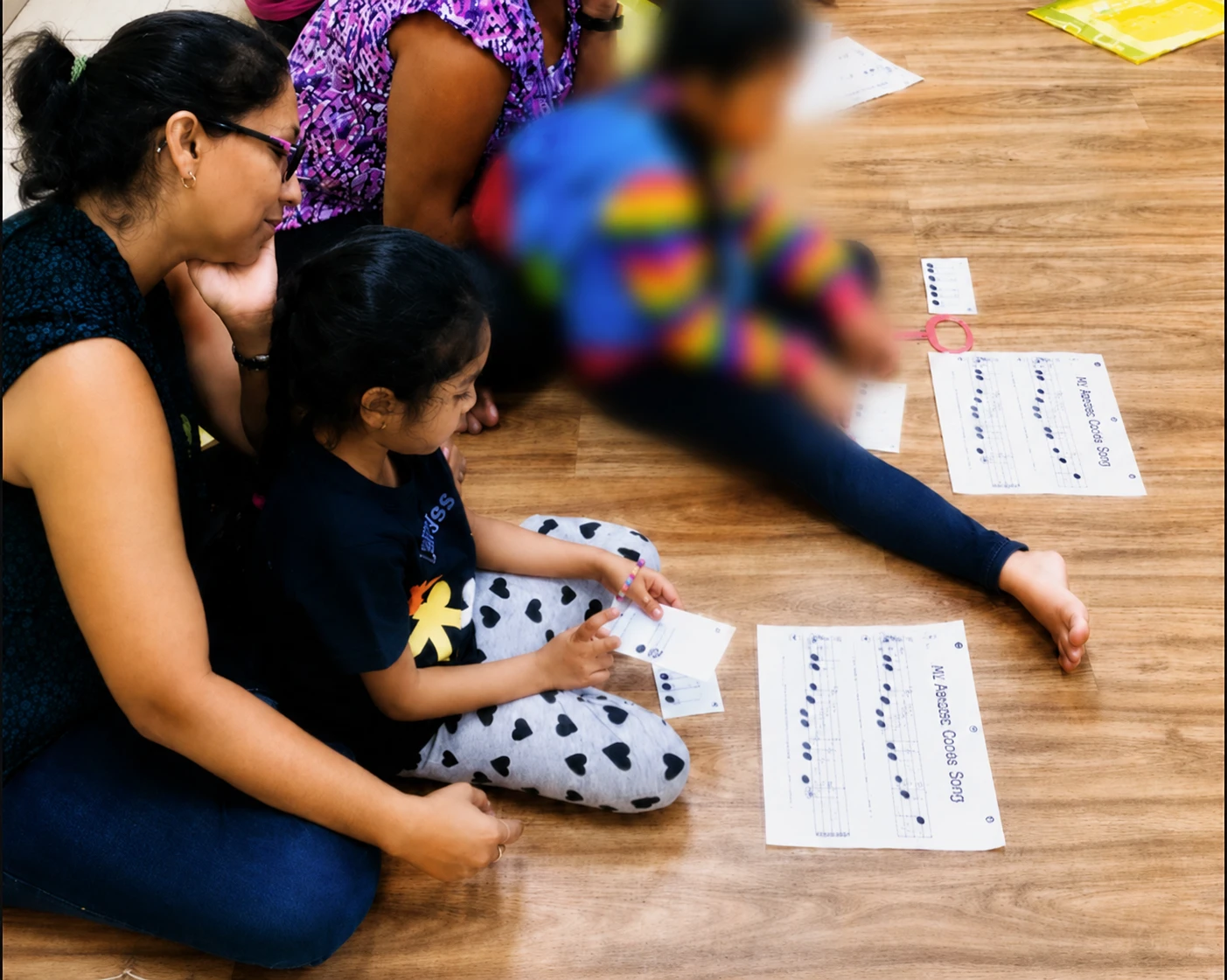
See the method in action
Inside the class
Now watch what all of that looks like with children in the room.
Movement, instruments, listening, language, waiting, turn-taking and joy are happening at the same time. After Parent Education, you will begin to notice much more than “they had fun.”
The videos support the story. The Parent Education MasterClass remains the page’s main action.
Before your first class
Four things will help you arrive ready.
Complete the Parent Education session before your first MusicVersity class.
Wear something comfortable. Our early-years sessions are active, and we work barefoot.
For the first class, one caregiver participates so the experience stays focused and easy to guide.
Children do not have to perform on command. We lead the experience and let participation grow through the class.
Before your first class
Come in knowing what everyone else may only see as “music class.”
This is the difference between simply being in the room and understanding the method your family has joined.
Your first step is Parent Education.
Complete the MasterClass before your first MusicVersity session, then come ready to recognise the listening, communication, movement, control and musicianship being built underneath the fun.
▶ Start the MasterClassNot enrolled yet?
Parent Education gives you the philosophy. An Introductory Experience lets you enter the method with your child before deciding what comes next.
P.S. You do not need to remember every idea in the MasterClass. Notice one thing differently in your first session and you have already started using it. Questions? WhatsApp us →