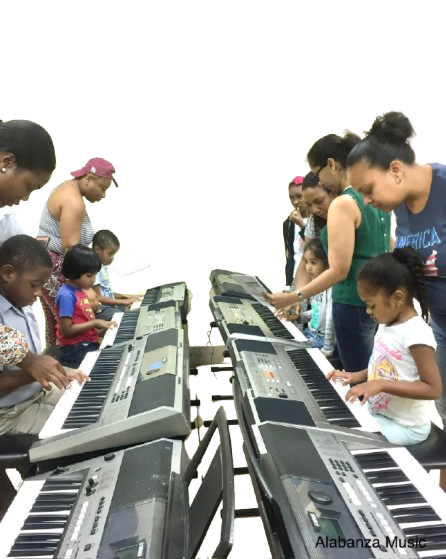
Semester I begins September 12 · Small-group placement is limited by level and readiness.
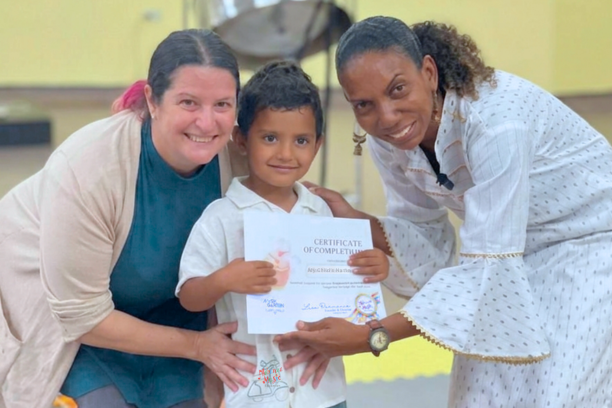
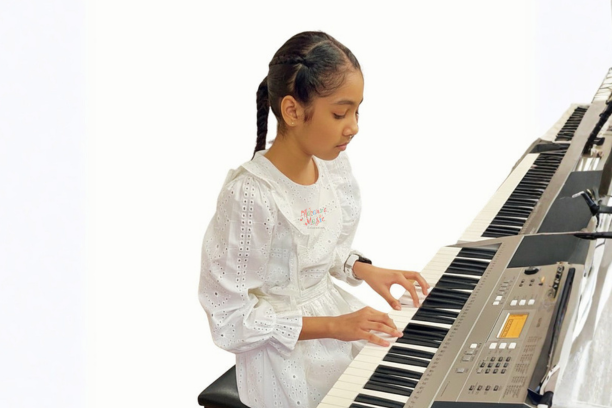
Alabanza Versatile Musicians student
For intentional families who want more than instrumental lessons

Build a child who can actually make music.

Versatile Musicians · Piano · Voice · Tenor Pan · 9+
Aural-first musicianship for children who are ready to move beyond reproducing pieces and learn to hear, understand, read, sing, improvise, create, accompany and perform.

International Musikgarten® pathway Gordon Music Learning Theory-informed Specialist-led
Reading music is one skill.

Musicianship is knowing what to do with music.

Caribbean's Exclusive ProviderLicensed Musikgarten® programme
USA ECMMA Board-CertifiedSpecialist leadership in T&T
U.W.I. · D.C.F.A.Flagship learning environment
Musikgarten® Exemplary AwardInternational programme recognition
First, a quick test

Can your child make music when the book closes?

A polished piece can sound impressive. These questions reveal something deeper: whether the child is becoming musically independent.

Can they find a familiar melody by ear?Without someone showing every note.
Can they sing the pitch before pressing the key?Connecting inner hearing to the instrument.
Can they hear a pattern and recognise it?Rhythm, melody, tonality, harmony.
Can they accompany another musician?Listening and responding in real time.
Can they improvise or create something new?Making musical decisions, not just following them.
Can they move between instruments with understanding?Transfer, not isolated memorisation.
The problem
The problem isn't that they can't play.
It's that sometimes they can only play what they've been programmed to play.

A child can become very good at executing instructions while still depending heavily on the page, the teacher or the exact piece they practised.

Book removed?The confidence disappears.
Different starting note?The melody suddenly feels unfamiliar.
Asked to accompany?They have never learned to listen that way.
Asked to improvise?There is no “correct answer” to copy.

We are not trying to manufacture musical robots. We are developing musically intelligent children.

We flipped the script

The ears before the eyes.

Children learn spoken language by hearing, imitating and understanding before they decode it on a page. Gordon Music Learning Theory applies the same foundational logic to music, and Musikgarten® places aural learning at the front of the pathway to musical literacy.

Hear
Sing
Move
Recognise
Play
Create
Read & Write
Aural training is not an “extra”. It is fundamental musicianship. Aural skills are assessed within graded instrumental examinations and are part of university-level musicianship study. Yet many children only meet them as isolated exam exercises. Here, the ear is deliberately trained from the beginning, so notation becomes a representation of music they understand, not the only route into it.
Why trust this approach?

Internationally grounded. Specialist-led. Caribbean by design.

Parents should not have to take a programme's claims on faith. Here is the training, curriculum, institutional context and international recognition sitting behind the class.

Musikgarten®

Internationally established developmental curriculum with a sequenced pathway from aural learning toward music literacy and keyboard musicianship.

Gordon MLT

Music Learning Theory centres audiation, the capacity to hear and understand music internally, as a foundation for higher musical skill.

U.W.I. · DCFA

Alabanza's flagship classes are held at the Department of Creative and Festival Arts, The University of the West Indies, St. Augustine.

Award-Winning Programme

Recipient of the Musikgarten® Exemplary Award. Alabanza Music has served families in Trinidad & Tobago since 2003.

Lisa D de Quiñones teaching at Alabanza Music
Founder & programme lead

Lisa D de Quiñones

Founder and Visionary Director of Alabanza Music, with over two decades in education across early childhood, primary, secondary and community settings. Her training brings together musicianship, language, movement and child development rather than treating them as separate worlds.

She is a USA ECMMA Board-Certified Early Childhood Music & Movement Specialist, licensed Musikgarten® educator, Dalcroze-trained through the Lucy Moses School in New York, and holds Honours degrees in Musical Arts and Spanish from U.W.I. She is also a formally trained keyboardist, arranger, conductor and adjudicator who has judged national competitions in Parang, Calypso and Steelpan.

USA ECMMA Board-Certified Musikgarten® Licensed Dalcroze Trained · NYC U.W.I. Honours · Musical Arts & Spanish 20+ Years in Education
What “versatile” actually means

The musician in the room who can do something with what they hear.

Not just more content. More usable musical ability.

01 · HEAR IT

Develop the ear

Recognise rhythm, melody, tonal patterns, harmony and musical relationships with growing independence.

02 · FIND IT

Work it out

Find familiar songs, chords and musical ideas instead of waiting for someone to provide the notation.

03 · SING IT

Internalise pitch

Strengthen vocal confidence, pitch matching, sight-singing and the link between inner hearing and performance.

04 · PLAY IT

Build technique

Develop functional skill at keyboard and tenor pan while connecting technique to musical meaning.

05 · CHANGE IT

Adapt and improvise

Transpose, vary, arrange and make musical decisions instead of treating every piece as a fixed script.

06 · SHARE IT

Function with others

Accompany, perform, listen across an ensemble and communicate musical ideas with confidence.

If you're happy with robotic playing, we're probably not for you

This programme asks for more.

If your goal is simply to reproduce a few prepared pieces, there are many routes to do that. If you want an all-round child who can understand, adapt and create with music, keep reading.

A limited musical outcomeVersatile musicianship
Plays the practised pieceUnderstands the musical patterns inside it
Depends on sheet musicReads music and also plays by ear
One-instrument thinkingTransfers musical understanding across Piano, Voice and Pan
Correct notes onlyGroove, phrasing, expression, listening and interpretation
Waits for the teacher's answerImprovises, composes and makes musical decisions
Solo preparation onlyAccompanies, collaborates and functions in an ensemble
Music disconnected from home cultureCaribbean identity alongside broad global repertoire
Don't take our word for it

Watch what musical independence looks like.

Real Alabanza students and parents. The proof should be visible, hearable and repeatable.

Student proof

Versatile Musicians in action

Watch the programme rather than reading another promise about it.

Musicianship proof

More than a rehearsed piece

Student application, musical thinking and performance in the real world.

Progress proof

Hear the difference

Because the outcome needs to sound different, not merely be described differently.

Parent + professional proof

Why a music professional chose Alabanza for her own child

Third-party validation from a parent who understands music education from the inside.

“The biggest change in her was her confidence. Her listening skills have also improved and her memory has surely strengthened over the years.”
Amanda B. · Daughter started at 4, now a Versatile Musician
“Look daddy, I could play ‘Listen for Bells’ on steelpan too!” Just listening and playing by ear. Those were the moments I realised YES, she was picking up.
Amia's Dad
“I saw this extremely unique, so well-deconstructed approach to music. I was roped in right away.”
Ms. Edwards · Music Teacher & MusicVersity Parent
Why Piano + Voice + Pan?

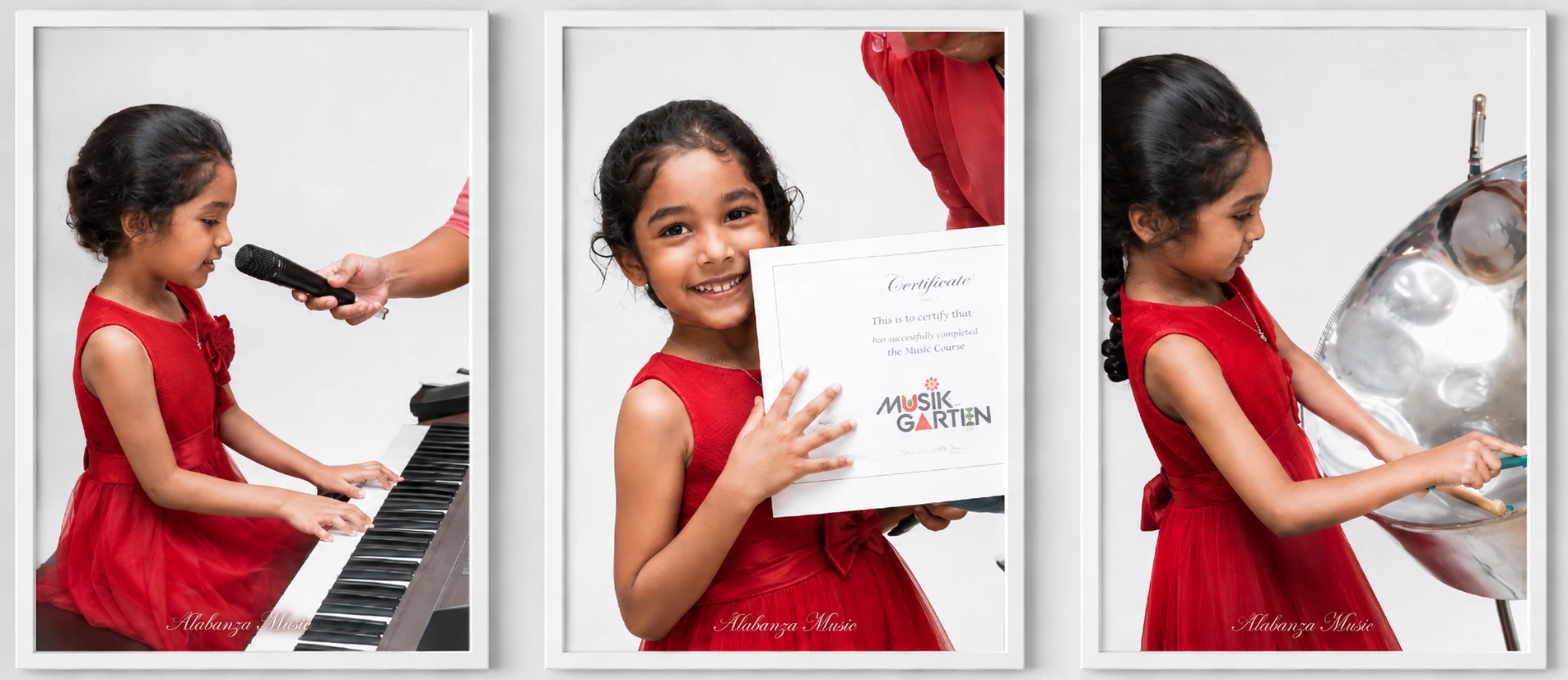
Three ways to understand one musical language.

The point is not to collect instruments. It is to build a musician whose understanding travels.

PIANO

Piano

Makes melody, harmony and musical structure visible and tactile. A powerful home base for understanding chords, accompaniment and notation.

VOICE

Voice

Develops the inner ear because the student has to produce pitch, phrasing and expression without pressing a ready-made note.

TENOR PAN

Tenor Pan

Builds rhythmic fluency, coordination, spatial memory and a lived connection to Trinidad & Tobago's musical identity.

The goal isn't three separate lessons. It's one highly adaptable musician.
World-class learning that sounds like home

Bach and Calypso belong in the same well-educated musical brain.

Your child should be able to read notation and catch a groove, study music from around the world and still recognise the sophistication of the musical culture right here in Trinidad & Tobago.

CalypsoParangFolkSteelpanCaribbean repertoirePopular favouritesGlobal repertoireWestern art music
The all-round child behind the musician

Real musicianship asks more of the whole child.

The musical goal is serious, but the capacities used to get there travel far beyond the instrument.

COMMUNICATION

Express an idea

Sing, phrase, respond, perform and communicate musical intention instead of merely reproducing instructions.

CONFIDENCE

Make a decision

Develop the confidence to try, adjust, improvise and continue when there is no single answer printed on the page.

CONNECTION

Work with other people

Listen across an ensemble, hold a part, accompany and contribute to something bigger than an individual performance.

FOCUS

Listen with intention

Track patterns, anticipate changes, remember sequences and sustain attention across increasingly complex musical tasks.

SELF-CONTROL

Respond, don't just react

Wait, enter, stop, adjust volume, change tempo and manage one part while remaining aware of everyone else.

REAL MUSICIANSHIP

Own the music

Bring ear, voice, body, technique, literacy, creativity and cultural understanding together as one usable skill set.

The easiest way to know if this is for your child

Experience the real programme first.

Two guided in-person sessions inside the Alabanza environment, so you can see the teaching, participation and musical thinking before deciding what comes next.

TT$400 Approx. US$64 · Ramajay Introductory Experience
Two in-person class experiences
Programme onboarding
Specialist placement guidance
Access to class instruments where applicable
First Session Confidence Guarantee
Choose My Introductory Experience
Confidence Guarantee Attend the first session and experience the programme. If you decide it is not the right fit before proceeding to Session Two, request your refund. 100% refund less the TT$100 / US$16 administrative fee.

Already musically experienced?
Excellent. Placement considers your child's age, existing musicianship, programme readiness and available level. We are not interested in making a capable child “start over”.

Why places are limited: Versatile Musicians is a levelled small-group experience. We cannot keep adding students once a class is appropriately balanced for musical readiness, ensemble work and focused attention.

Before you begin

Questions thoughtful parents usually ask.

My child already takes piano. Would this mean going backwards?

No. We consider what your child can already do and where their musicianship can broaden. The goal is not to erase previous learning, but to add the aural, creative, vocal, ensemble and transferable skills that may not have been deliberately developed.

Will my child still learn to read sheet music?

Absolutely. Reading is essential. We simply reject the idea that reading should become the child's only way into music. Students develop notation alongside listening, audiation, singing, playing, improvisation and musical understanding.

Does my child need previous music experience?

Not necessarily. Entry is based on age, readiness and the most appropriate level. Children with prior experience are also welcome and are placed according to what they can actually do, not merely the number of years they have taken lessons.

Why a group instead of only individual lessons?

Because musicians need musicians. Group learning develops listening, timing, ensemble awareness, accompaniment, musical response and performance confidence in ways that cannot be fully replicated when a student only ever plays alone with a teacher.

Do they have to become equally advanced on all three instruments?

No. The instruments work together as complementary routes into musicianship. Piano serves as an important harmonic and technical foundation, while voice, pan and ensemble activities deepen the ear, rhythm, expression and transfer of musical understanding.

What will we need at home?

Regular access to the primary practice instrument is important. Families are guided on suitable home equipment and the materials used for the child's level.

How is this connected to Musikgarten® and Gordon Music Learning Theory?

Musikgarten's pathway to music literacy is grounded in developmental, aural-first learning and acknowledges the influence of Edwin Gordon's research. Versatile Musicians takes those foundations into increasingly independent instrumental, vocal, creative and ensemble application.

Versatile Musicians · 9+

Don't just teach them to play pieces. Teach them how music works.

If you want a child who can hear it, find it, sing it, read it, play it, change it, create it and share it, you're in the right place.

Begin Their Introductory Experience Ask on WhatsApp
P.S. Semester I begins September 12. Placement is by readiness and availability, so a suitable level can fill before the Semester begins.